

According to a new report by the National Biodiesel Board that studies the positive effect of the tax credit, “The ailing U.S. biodiesel industry is producing at 15% of its potential capacity.” It argues that if the federal government does not extend the tax credit, set to expire on Dec. 31, 2009, the entire industry could “cease altogether.” This year, U.S. biodiesel numbers are expected to drop 31% to 475 million gallons.
 But amid the industry uncertainty, some good news. Good Energy, Inc., based in Magnolia, Ohio, has opened their G2 Diesel plant. The plant has the capacity of 16,500,000 gallons per year. G2 Diesel is 11 Good’s proprietary fuel made from nearly 99% natural and renewable ingredients. G2 Diesel is primarily made from a
  blend of soybean oil and ethanol. According to the company, G2 Diesel has shown an increase in fuel efficiency and horsepower, while lower emissions and maintenance costs and can be used in conjunction with #2 diesel in any diesel engine application.
“We are very pleased with the progress of our company as we accomplish this major milestone,” said 11 Good’s CEO, Frederick C. Berndt. “This will allow our company to serve our current customer base as well as allow our fuel to be tested and integrated throughout North America.
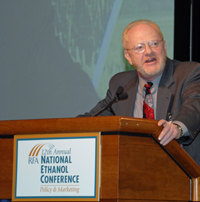 Robert Reynolds of Downstream Alternatives received the award for his “outstanding and dedicated contributions to fuel standards development and as a consensus builder within ASTM between ethanol and petroleum interests.”




 An Illinois company has received a $2.5 million federal grant to put in a demonstration project in an Iowa biodiesel plant that could allow the facility to produce the green fuel and cosmetics.
 Tomorrow (Tuesday) night will be a magical time in Washington, D.C., as the Capitol Christmas Tree is officially lit.
 “It is significant that the Capitol Christmas Tree was delivered with biodiesel because economic development, carbon reduction, and energy security continue to dominate national priorities,” said Joe Jobe, CEO of the National Biodiesel Board. “Biodiesel helps us achieve all of those things.”
 The
The