

 A St. Louis-based company has recently finished testing of a product that not only will boost the performance of biodiesel … just in time as more people look at using higher blends of the green fuel … but some it is being made from renewable feedstocks.
 International Fuel Technology’s Director of Science and Technology, Sergio Trindade, explains IFT’s DiesoLiFT 10, designed to reduce harmful emissions and maintenance costs when mixed with diesel fuel and biodiesel fuel blends, and DiesoLiFT BD-3, formulated to give biodiesel superior oxidation stability and deposit control benefits, optimizes the compression combustion that takes place in the engine.
“Which means the surface exposed to combustion is much larger than the ordinary injection system without our additive.”
He goes on to explain that this optimization becomes more important as the industry moves to higher blends of biodiesel, such as B20.
“When you get to those higher biodiesel concentrations, you lose some of the mileage. The use of our product helps makeup for that loss in mileage.”
If you’re wondering if you would be replacing the cost of the biodiesel with the cost of IFT’s additives, Trindade says while the additives produce a 4.5 percent increase in mileage, you’ll spend only that first 1 percent to use the additive. That means it still returns about four-to-one on the investment.
Trindade adds they are making a portion of IFT’s DiesoLiFT 10 and DiesoLiFT BD-3 from some of the same renewable feedstocks used for biodiesel and hopes to increase those feedstocks in the future.
You can hear more of my conversation with Sergio Trindade in the player below.
Sergio Trindade, IFT interview


 The RFA will continue their partnership with the Legendary Buffalo Chip campgrounds by promoting the use of ethanol fuel through promotional materials, banners and merchandise, featuring the “Fueled with Pride” logo, to volunteers, staff and motorcycle enthusiasts from all over the country. The Legendary Buffalo Chip staff and vehicles will show their support by sporting “Ethanol: Fueled With Pride” decals as they travel throughout the grounds.
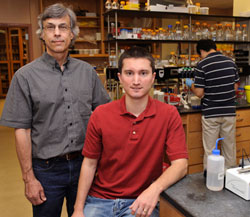 ISU biochemistry professor Thomas Bobik invented a process for manufacturing the much-used fuel additive and industrial chemical that is currently made from petroleum by identifying a new, natural enzyme that produces the fuel organically. Isobutene is a gas used to produce chemicals and also in the manufacturing of fuel additives, adhesives, plastics and synthetic rubber. It can be chemically converted to isooctane, which is a fuel that could be used to replace gasoline additive methyl tert-butyl ether (MBTE), which can be environmentally harmful. Isooctane is used in gasoline to stop engine knocking and other problems. Currently, isooctane is produced from petroleum products.
  Producers, consumers and distributors of bioenergy products can access crucial data through the
 On Wednesday, Rep. Stephanie Herseth Sandlin (D-SD) introduced the Consumer Vehicle Choice Act of 2010 (H.R. 5633) and the Consumer Fuels Choice Act of 2010 (H.R.5632). The first would mandate that auto manufacturers provide consumers with greater choice of flex fueled vehicles (FFVs). Under this legislation, 50 percent of cars and light duty trucks in model years 2011 and 2012 must be FFVs, and that percentage rises to 90 percent in model year 2013 and years after. The second bill would promote ethanol use through grants for the installation of blender pumps. The bills are co-sponsored by Rep. Adrian Smith (R-NE).