The Food and Agricultural Organization of the United Nations (FAO) has recently released a new report that champions jatropha as a promising biodiesel crop especially for global rural farmers. The report, “Jatropha: A Smallholder Bioenergy Crop, the Potential for Pro-Poor Development,” set out to examine the potential for jatropha as a sustainable biodiesel crop and has been in development since 2008.
The authors write, “As developing countries face increasing local demand for energy in rural areas, they also must deal with both economic and environmental pressure on agricultural lands in general. The possibility of growing energy crops such as Jatropha curcas L. has the potential to enable some smallholder farmers, producers and processors to cope with these pressures.”
 The report says jatropha is a promising crop in part because it can grow on marginal lands, in drought conditions and animals do not graze on the crop. It also holds the promise of high oil output. The report also notes some of the feedstock’s drawbacks which include the fact that no consistently high yielding varieties have been developed and because the plant is toxic to both humans and animals, it can not be used for livestock feed, a major added value to most biofuel feedstock production.
Jatropha originated in Central America and is making headway in Africa and parts of Asia for biodiesel development. Experts predict that by 2015, Indonesia will be the largest jatropha producer in Asia, Ghana & Madagascar in Africa and Brazil in Latin America.
While the report ultimately favors the crop, it does caution that depending on how programs are developed, there could be significant environmental damage that would outweigh the positive environmental attributes of biodiesel.
The report does not study the possible future of jatropha in the U.S., although at this time there are a few studies underway. In addition, it is not recognized as a biodiesel feedstock under current Renewable Fuels Legislation (RFS2).

 Attendance at the
  In the report “
 It’s August in the nation’s capitol and the climate is hazy, hot and humid with a chance of afternoon thundershowers, which
  Despite the few legislative days left on the Congressional calendar, Dinneen says he remains hopeful that the blenders tax credit for ethanol will be extended in some form for some length of time before it expires at the end of the year. However, he remains very frustrated with delays in getting E15 or at least E12 approved in the interim by EPA. “EPA continues to be one of the most dysfunctional agencies in the federal government,” Dinneen says. “One wishes that the agency had been as diligent in studying the blow out preventers that BP was using in the Gulf of Mexico.”
 Harkin says they talked with the officials about the importance of moving to E15, the need to mandate the manufacturing of flexible fuel vehicles and the installation of pumps that provide for high ethanol fuels and loan guarantees for biofuel pipelines. “We all agree that we must reduce our dependence on foreign oil, and that this will require a multi-pronged strategy, including more efficient use of transportation fuels and expanded use of alternatives to petroleum-based fuels,”
 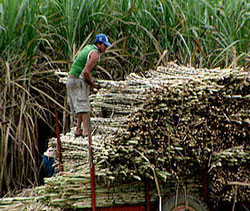 The cane crush in Brazil so far this year is running about 20 percent ahead of last year, which is not necessarily good news according to the
 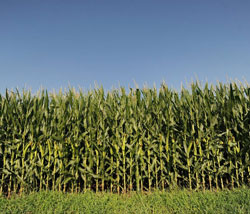 Meanwhile, here in the U.S., ethanol production was up 14,000 barrels per day in May, according to the