

 Ethanol producers who attended the recent Export Exchange event sponsored by the Renewable Fuels Association (RFA) and the U.S. Grains Council know how important it is to promote increased exports of the ethanol co-product distillers dried grains with solubles (DDGS).
“For every three bushels of corn that comes in, you get a bushel of DDG out, and what we sell that DDG for helps us to create a revenue stream so we can buy more corn,” said Walt Wendland with Golden Grain Energy of Mason, Iowa who serves as secretary on the RFA board.
2010 exports of DDGs are expected to exceed last year’s record 5.65 million tons. “One of the surprising things is that the amount of distillers grains that we’re going to be exporting for the first time is going to exceed the amount of soybean meal,” Wendland says. “We’re recognized now as being a very reliable supplier of DDG around the world.”
Listen to or download an interview with Walt Wendland here: Walt Wendland Interview
 The Export Exchange included nearly 500 attendees from 33 countries and the proceedings were translated into 7 languages. Ray Defenbaugh of Big River Resources West Burlington ethanol plant in Iowa says he has been coming to the event since it was started by USGC a few years ago. “It’s just an opportunity for networking and there’s a huge demand in other countries for DDGs,” said Defenbaugh. “If you come here and go away without having met somebody that could help you in transportation or sales from another country, than you’ve not really tried very hard.”
Defenbaugh is chairman of the DDG committee for RFA and is very pleased with the efforts they are making to increase exports of the ethanol co-product.
Listen to or download an interview with Defenbaugh here: Ray Defenbaugh Interview
 The webcast will be coming from CME’s third annual


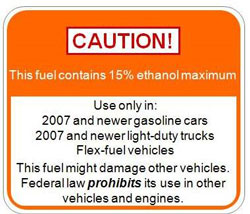 The Environmental Protection Agency has
  Meanwhile, Dinneen says the industry is working together on the technical issues to make this limited introduction of the ethanol blend as smooth as possible. “First, working with
  Heavy rains, nearly 60 percent higher than average for the month, hampered cane crushing for second consecutive two-week period, but reportedly favored ethanol production in the South-Central Brazil region. UNICA Technical Director Antonio de Padua Rodrigues says they are experiencing “another exceptional year” in terms of weather conditions. “From April to early September, the amount of rain was well below the historic average, reducing the availability of cane. Already in September, especially at the end of the month, rainfall returned with greater intensity than expected, hampering the harvest and, more importantly, reducing the quality of cane that will be crushed in October,” he said, adding that these factors should impact the overall production of sugar and ethanol at the end of the harvest.
 According to a
  The commercial potential of cellulosic ethanol in Brazil is substantial due to the great amount of sugarcane bagasse, a fibrous residue of sugarcane production, available in the country. Brazil is the world’s largest sugarcane producer with an extraction capacity of approximately 600 million tons per year, currently yielding 27 billion liters (7 billion gallons) of ethanol. It is estimated that bagasse-to-ethanol technology can increase the country’s ethanol production by some 40% without having to increase the crop area.
 Perdue BioEnergy has partnered with Bionol Clearfield, a subsidiary of
 The fuel will be provided to NASCAR by