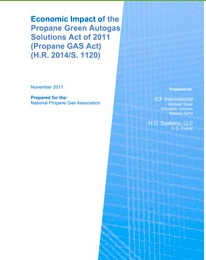
 The National Propane Gas Association (NPGA) has released a new study to look at the economic impacts of the Propane Green Autogas Solutions Act of 2011 should it be passed. The Economic Impacts of the Propane Green Autogas Solutions Act of 2011 was performed by ICF International and utilized market data from propane autogas fuel providers, vehicle manufacturers and fleet consumers. The report found that the growth in propane vehicle sales and use created by the tax credits could generate economic activity between $4 and $5.7 billion and provide 30,000 – 42,000 new jobs by 2016.
“H.R. 2014 and S. 1120 would extend for five years federal alternative fuel tax credits for propane used as a motor fuel, propane autogas vehicles and propane autogas refueling equipment,” said NPGA President and CEO Richard Roldan. “The Propane GAS Act offers certainty to the marketplace to further solidify propane autogas as a competitive alternative transportation fuel.”
“Autogas vehicle market incentives are good fiscal policy. The Propane GAS Act provides incentives to make the switch to an American-made alternative fuel and with clear policy benefits,” added Roldan who concluded by noting that in the short-term, no one fuel can displace conventional fuels but propane autogas can have an immediate impact.


 The 2011 edition of the
  “This is a deeply disturbing picture that the IEA has painted for the world,” said Bliss Baker, spokesperson for the
  As presidential candidate Rick Perry returned to Iowa today, the
  “How in the world does Governor Perry justify 20 more years of tax subsidies for oil companies?” asked IRFA President Walt Wendland. “The renewable tax credits cease at the end of this year. But despite that some of the oil subsidies go back 100 years, now we’re told that Perry wants to give oil companies another 20 years of subsidies. Given this extreme position, Perry’s talk about not picking winners and losers and having a level playing field is simply hollow rhetoric.”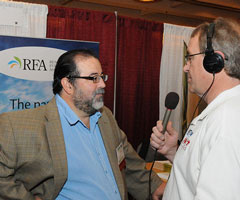

 Starting this week, Alaska Airlines began 75 commercial passenger flights in the United States powered by biofuel made from used cooking oil.
 Some 100 farmers are waiting for word on the status of the Biomass Crop Assistance Program (BCAP) in the 2012 federal budget before delivering the bales to POET’s 22-acre biomass storage site in Emmetsburg, where the commercial cellulosic ethanol biorefinery is being constructed.
 The Nebraska Ethanol Industry Coalition (NEIC) will be heading up the statewide project with partners including the