Subsole, one of Chile’s largest locally owned exporters of table fruits, is planning to use solar energy from the Atacama desert to help supply its power as the company grows.
Subsole plans to increase output 60 percent over the next four years, mostly by expanding farming in the Copiapó Valley, a region 800 kilometers north of Santiago that is surrounded by the Atacama Desert. The desert is the driest place on earth and the region has the highest solar radiation on the planet.

In order to be able to boost output competitively, Subsole plans to build a 300 kWp (kilowatts-peak) solar photovoltaic plant in the valley to power its irrigation systems. The new plant, the first ever by a Chilean fruit producer, will allow the company to pump water from underground aquifers cheaply and sustainably in a region where a thriving mining industry competes fiercely for scarce electricity. Subsole is using a $32 million loan and technical assistance from the Inter-American Development Bank (IDB) to fund this project.
“The solar plant will allow us to reduce our carbon footprint while ensuring stable energy costs and better energy efficiency,” said Miguel Allamand, Subsole’s president, who founded the company 20 years ago.
With technical and financial support from the IDB, the company will conduct energy audits in six irrigation sites and three packaging and cold storage facilities. It also will carry out a pre-feasibility study to implement solar cooling technology, to improve irrigation and water storage methods, and to build energy-efficient storage and packaging facilities with state-of-the-art technology.
“Subsole’s investment will enhance its sustainability practices and will have a significant impact along the entire supply chain, benefitting 275 small and medium-sized producers and creating more than 10,000 direct and indirect jobs, ultimately impacting approximately 82,000 beneficiaries along the supply chain,” said Paola Bazan, the project team leader for the IDB.
The loan is a milestone in the long-term relationship between the IDB Group and Subsole. In 2002, the company was the first Chilean fruit producer and exporter to receive financing from the Inter-American Investment Corporation ( IIC ), a member of the IDB Group. In 2008 the IIC made a second loan to a company of the Subsole group. The group also benefited from a diagnostic review process under FINPYME, a program that helps small and medium-size enterprises (SMEs) become more competitive and gain access to longer-term financing.
The IIC’s first loan, a $7 million facility fully repaid in 2008, enabled Subsole to finance the increase in output of thirteen of its small independent fruit suppliers. The second IIC loan to the Subsole group, which is still outstanding, was used to finance the construction of a cold storage and packing plant in Copiapó.


 The U.S. Postal Service may be in the red but they’ve been promoting going green this holiday season.
 According to the report, “
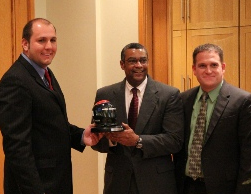 The Indiana company this week received the 2011 Paul Dana Excellence in Bioenergy Leadership Award from the state department of agriculture. The award was established to honor the memory of Indy Racing League driver Paul Dana who was killed in a racing accident in 2006 after seeing the fulfillment of his dream that the IRL adopt ethanol as a racing fuel.
 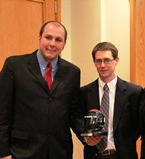 Paul Dana’s brother Greg, pictured here with Berry, was also on hand for the award presentation. He says the award means a great deal to the Dana family. “We’re honored that folks remember Paul and remember the work that he did, both on the race trace and off,” said Dana. “What Ignite has done is bring to fruition what Paul was working on 6-7 years ago to bring ethanol to all the grassroots racing in the country.”
  South Dakota Governor Dennis Daugaard says

 “We’re disappointed,” said Anne Steckel, vice president of federal affairs for the