

 Two companies have teamed up to develop advanced feedstocks for biofuels, biopower and biobased products.
The collaboration between DuPont and the bio-based firm NexSteppe will be working on new feedstocks for renewable energy, including sweet sorghum and high biomass sorghum hybrids.
 Under the agreement, DuPont has made an equity investment in NexSteppe, and through its Pioneer Hi-Bred business, will provide knowledge, resources and advanced technologies to help the company accelerate the breeding and commercialization of new hybrids of these crops in the United States and Brazil.
“We’re using science-based innovation and collaboration to develop scalable, sustainable feedstock options for the biobased industries,” said John Bedbrook, vice president for DuPont Agricultural Biotechnology. “Collaborations like this one with NexSteppe will provide new opportunities for growers to address the rising demand for secure, environmentally sustainable and affordable alternatives to fossil fuels.”
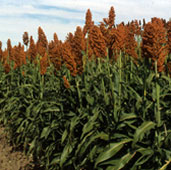 “Sorghum is a crop with significant genetic diversity and great potential that has received relatively little research attention and funding,” said Anna Rath, NexSteppe founder and CEO. “Combining DuPont’s world-class research and development capabilities with our industry knowledge, experienced team and singular focus, we will be able to rapidly improve the crop to produce feedstocks tailored to the needs of the biofuels, biopower and biobased products industries.”
Sorghum has many advantages as a feedstock. It is naturally tolerant to both drought and heat and can grow in marginal rainfall areas with a short growing season and the ability to work in crop rotation systems. Sweet sorghum can be used as a complement to sugarcane in existing Brazilian sugar to ethanol mills, and as a feedstock for advanced biofuels and other biobased products produced from sugars. High Biomass Sorghum is a high-yielding crop that can be used as a feedstock for biopower and cellulosic biofuels. DuPont, through its Industrial Biosciences business, operates and develops industrial processes that use sugar as a feedstock.
 Global chemical giant BASF has invested $30 million in a Pennsylvania-based company that has developed a process to produce cellulosic sugars for renewable chemicals and biofuels.
 Renmatix has developed the patented Plantrose™ platform whereby industrial sugar can be produced from lignocellulosic biomass (wood, cane trash or straw). In the Plantrose technology, biomass is split into cellulose and sugar in supercritical water at high temperature and pressure in a two-step process.
 “This ruling reaffirms our position that the state of California violated the U.S. Constitution when it created a low carbon fuel standard punitive to farmers and ethanol producers outside of the state’s border,” said

 At the end of 2011, the
  In this edition of “The Ethanol Report,” Renewable Fuels Association president and CEO Bob Dinneen comments on the year in preview and some of the top ethanol stories he expects to see in 2012.
 Company officials say the plant closures are temporary and due to current depressed market conditions for ethanol. The two plants amount to 55 million gallons per year of production.
 The two Republican presidential candidates who topped the Iowa Caucus in a virtual dead heat Tuesday night are both considered to be supporters of renewable fuels.
 In honor of the cooperative’s 85th anniversary this year, a