

 The Advanced Ethanol Council (AEC) this week urged Senate Ag Committee Chair Debbie Stabenow (D-MI) and Ranking Member Pat Roberts (R-KS) to include two key tax extensions for advanced and cellulosic ethanol producers in the next farm bill.
In a letter to the committee leaders, AEC Executive Director Brooke Coleman wrote, “The Cellulosic Biofuels Producer Tax Credit (PTC) — created in the 2008 Farm Bill — and the Special Depreciation Allowance for Cellulosic Biofuel Plant Property are vital to the ongoing development of the domestic advanced ethanol industry. … Several billion dollars have been invested in advanced biofuels development with the expectation that Congress will stay the course with regard to its commitment to the industry. A tax increase on advanced biofuels at this time would curtail investment and undercut an industry just starting to close deals and break ground on first commercial plants.”
Beyond the tax extension, Coleman also highlighted four areas in which the Farm Bill could help accelerate the commercialization of advanced and cellulosic ethanol technologies. These areas include extending the USDA Loan Guarantee program for biorefinery projects with changes to facilitate participation by lending institutions.
Also, Coleman asked for support of USDA’s efforts to build out ethanol refueling infrastructure via the Rural Energy for America Program to allow ethanol to compete in the market based on price, reform the Biomass Crop Assistance Program, and modify the Repowering Assistance program to help existing bio-refining operations deploy advanced ethanol technologies and feedstock utilization.
Read the entire letter here.

 Biofuel and renewable chemical company executives, scientists and government officials from around the globe will speak in breakout sessions at
  The coalition is asking members of Congress to support the inclusion of E85 in the Alternative Fuel Credit in the tax extenders package currently under review. In coordination with this effort, members of the Coalition for E85 will be in Washington this week to meet with their Congressional representatives to explain how E85 is defined as an alternative fuel everywhere in the U.S. code, except in the Internal Revenue Code and that amending the Alternative Fuel Tax Credit to include E85 would give the fuel the same tax status as other alternative fuels, such as compressed natural gas and propane.
  In this edition of “The Ethanol Report,” Renewable Fuels Association president and CEO Bob Dinneen talks about what this means for the challenge to the RFS, which is vital to the expansion of renewable fuels for the transportation sector of the United States. “In the absence of the tax incentive, what is providing the foundational demand for the ethanol industry is the Renewable Fuel Standard,” says Dinneen. “We think that program has proven to be tremendously successful in reducing our nation’s reliance on imported oil.”
 A major issue in the oral argument was whether these groups were properly before the Court. The ethanol industry through the
  “We are pleased that the environmental group petitioners realized that their challenges were so unlikely to succeed that they dismissed their case. We only wish that they had come to this conclusion before wasting the resources of the government and biofuels producers who had to defend the challenges in briefing,” added RFA President and CEO Bob Dinneen, who noted that the environmental groups decided to drop their claims on Friday.
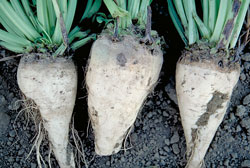 The partnership includes Green Vision Group (GVG) of Fargo and
  “As part of his blueprint for an American economy built to last, President Obama called for an all-out, all-of-the-above energy strategy that’s cleaner, safer, full of new jobs and develops every available source of American energy,” said Gage. “Extending the Advanced Energy Manufacturing Tax Credit will encourage further investment in clean energy manufacturing here in Nebraska and across the nation, ensuring new windmills, solar panels and biofuel products are produced and assembled by American workers.”
  The
The  NEC Connect provides access to the online social networking community designed specifically for the NEC, allowing attendees to design their own profile, link other social networking sites to their profile, communicate with other attendees via conversations and private messages, as well as see which attendees they have the most in common through categories and tags. NEC Connect also lets each attendee design their own session schedule and invite other attendees to private meetings.