Ethanol has been scapegoated for just about every blip in food markets in recent years, but the question of whether that is fact or fabrication was taken on during the recent 17th annual National Ethanol Conference.
In keeping with the NEC’s tradition of generating constructive debate by exposing members to opposition viewpoints, the Food Versus Fuel panel included Dr. Steve Meyer of Paragon Economics, who has been an outspoken opponent of ethanol from the viewpoint of livestock producers in particular. The panel was set up in a “point-counterpoint” format, with USDA International Affairs Specialist Dr. Gerard Ostheimer taking the “point” position and leading off the discussion.
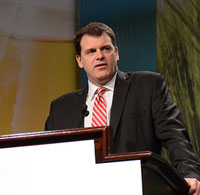 Following on the heels of a rousing speech of Agriculture Secretary Tom Vilsack, Dr. Ostheimer thanked ethanol producers for their contributions to America’s energy portfolio and noted that the energy policy for development of biofuels was deliberately set up to grow slowly. “We understood that increasing this demand would have an effect on global markets and price and so we chose to do so, not in a shocking way, but in a steady, clear and transparent way and the result has been phenomenal.”
Ostheimer, who represents the United States to the Global Bioenergy Partnership, noted that there are several factors that contribute to commodity prices over the next decade, most importantly being demand from countries like China. “Because they’re growing and they want to eat more meat,” he said, adding that input costs are also a huge driver of prices. “We feel that in the developing world we can create synergy between improved energy access from bioenergy, which will improve agricultural yields, which will lift all boats for all people.”
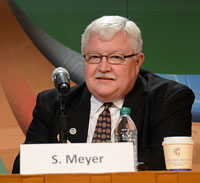 Dr. Meyer opened his remarks by stressing that he is “not opposed to ethanol…expensive oil and gasoline clearly provide an opportunity for ethanol and are a reason that we should continue to make biofuels.”
However, he says his problem with ethanol stems from U.S. energy policy. “The supply of total feed grains and high energy feed ingredients for U.S. livestock, poultry and dairy sectors has gone down,” Meyer claimed, showing data that contradicted Ostheimer’s.
Meyer showed a picture of a starving Ethiopian child being watched by a vulture – a Pulitzer Prize winning photo taken in 1993 that he noted had “nothing to do with ethanol.” While contending that global food prices have increased dramatically since 2006, Meyer also admitted that more food is not the entire answer. “The real thing is that we have to have economic development,” he said. “These people have to have a way to grow food and earn a living and have a way to have a voice in a stable government.”
The use of the shocking photo that had nothing to do with ethanol’s impact on food prices offended many in the audience and helped to justify the claims of the ethanol industry that their opponents use emotionalism, misinformation and fabrication to work against the development of biofuels. “I didn’t think that was at all constructive,” said Renewable Fuels Association president Bob Dinneen. “That has no place in a reasonable dialogue.”
Listen to or download the NEC Food vs. Fuel debate here: NEC Food vs. Fuel Panel
2012 National Ethanol Conference Photo Album


 The website provides free membership for listing, responding and searching any pre-owned alternative fuel vehicle located across the nation, including those powered by propane autogas, ethanol, CNG, electricity and biodiesel, as well as hybrid vehicles.
 At issue is California’s request for a stay of the injunction issued by District Court Judge Lawrence J. O’Neill when he ruled in December that the new fuel regulation issued by the California Air Resource Board (CARB) violated the Commerce Clause and was therefore unconstitutional.
 Rabobank first points out significant changes in U.S. ethanol policy starting in 2012. The VEETC blending credit and a tax on ethanol imports both expired in December 2011 and U.S. ethanol industry groups have shifted their political weight toward initiatives like E15 and advanced biofuels.