The White House today released a one-year progress report on the “Blueprint for a Secure Energy Future,” the Administration’s all-of-the-above approach to American energy.
 Among the highlights noted in the report is that the plan has resulted in a doubling of renewable energy generation from wind, solar, and geothermal sources since 2008. According to the report, “Since 2009, DOI has approved 29 onshore renewable energy projects—about 6,600 megawatts—including: 16 solar projects, 5 wind farms, and 8 geothermal facilities. These projects include the first solar projects ever permitted on public lands.”
In the area of developing advanced alternative fuels, the report notes that in 2010, “President Obama set a goal of breaking ground on at least four commercial scale cellulosic or advanced biorefineries by 2013. That goal has been accomplished, one year ahead of schedule. Together, these projects, and associated demonstration and pilot projectswill produce a combined total of nearly 100 million gallons per year of advanced biofuels capacity.”
In addition, EPA’s continued implementation of the National Renewable Fuels Standard (RFS) has supported a growing domestic renewable fuels industry. Last year, industry reported production of approximately 14 billion gallons of renewable fuels, about 8% of total U.S. highway vehicle fuel. In fact, U.S. biofuel production is at its highest level, as average monthly production increased more than 40 percent between 2008 and 2011. EPA worked with stakeholders in evaluating new fuel technologies and feedstocks to support expanded opportunity for these fuels to be an important part of the domestic transportation fuel market. To help support deployment of advanced fuel infrastructure, in 2011, the Department of Agriculture provided over $4 million in grants to fund 265 flex fuel dispensers in 30 states.
The report also made note of progress in the development of aviation biofuels, more alternative fueled vehicles in the federal fleet and the launch of the National Clean Fleets Partnership, an initiative to help large, private sector companies improve the efficiency of their fleets and reduce the country’s dependence on oil.
 “This is an amazing difference from just five years ago,” said Purdue agricultural economist Dr. Chris Hurt. “The hog industry was largely set up with $2-2.50 corn going into 2006. After that we saw major increases in those corn prices.” Dr. Hurt spoke to swine veterinarians on the topic of “Global Feed Economics in a Biofuel World” during seminar in Denver on Friday.
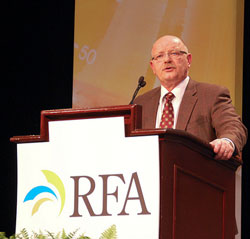 The president of one of the world’s largest ethanol plant engineering and construction firms is pleased with the progress made by the industry in the last 30 years, but frustrated by the barriers to higher ethanol blends.
  Biofuels organizations are strongly urging lawmakers to approve an


 The
The