The ethanol industry responded today to complaints made by the American Petroleum Institute about the Environmental Protection Agency’s approval of E15 for commercial use.
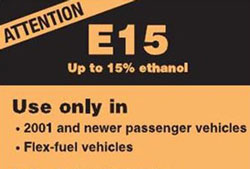 In a conference call with reporters, API Downstream Group Director Bob Greco presented a “new analysis” of EPA’s regulations which claims “an estimated half of all gasoline station equipment is not compatible with E15” and said that this could result in serious safety and environmental problems for consumers.”
American Coalition for Ethanol (ACE) Senior Vice President Ron Lamberty said it was not surprising to see the oil industry attach E15. “But it is surprising to see them going after pumps and tanks, because most of that equipment has been tested – for decades – using at least 15% ethanol,” Lamberty said. “Underwriters Laboratories (UL) listing for petroleum equipment requires that they pass dozens of tests using fuel that contains 15% ethanol and their listing for tanks and piping defines “alcohol-gasoline mixtures” as any level of ethanol or methanol up to and including 100%.”
Lamberty, who owns and operates a Sioux Falls convenience store, added that the pumps at his station are warrantied for E15, and his tanks and lines are compatible with gasoline ethanol blends. “My biggest infrastructure problem with E15 is that the API-member oil company that supplies my station won’t let me sell it,” he said.
The Renewable Fuels Association noted that the industry is working with all stakeholders to address any safety issues regarding E15, including a website dedicated to E15 information (www.E15fuel.org), a misfueling mitigation plan to help retailers avoid confusion, and an E15 Retailer Handbook for gas station owners seeking to offer E15.