

Big River Resources, LLC has become the 66th associate member of Growth Energy, the leading coalition of U.S. ethanol supporters. Big River adds its three plants, located in Galva, Ill., Dyersville, Iowa and Boyceville, Wisc., to Growth Energy’s plant membership, making a total of 79.
 “Being able to add the three Big River Resources plants to our coalition is a great accomplishment,” said Growth Energy CEO Tom Buis. “This group represents a large market share across the Midwest, and is directly responsible for producing a significant quantity of ethanol. Their membership further enhances our ability to raise awareness of the benefits of ethanol as a fuel source, as well as better educates Americans on the importance of diversifying our energy basket with home-grown products.”
Big River Resources, which began producing ethanol in 2004, now has the capacity to produce approximately 400 million gallons of ethanol per year, and purchases approximately 138 million bushels of locally-grown corn. In total, the company owns four separate ethanol, feed and corn oil producing facilities across three states, employing more than 230 people and earning revenues in excess of $1 billion. The addition of the three plants greatly increases Growth Energy’s reach and visibility across a key market.
“We are enthusiastic in promoting our company’s original goals and feel that Growth Energy is an effective means for promoting these goals,” said Big River Resources President and CEO Raymond Defenbaugh.



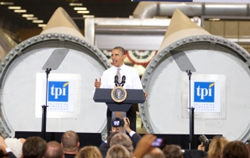 Obama spoke to workers at TPI Composites, a company that makes blades for wind turbines and employs more 700 people. “If Congress doesn’t act, companies like this one will take a hit,” he said. “Jobs will be lost. That’s not a guess, that’s a fact. We can’t let that happen.”

 There are over 300 locally and independently operated FS FAST STOP and FAST STOP Express locations so GROWMARK Renewable Fuels Product Manager Brigette Harlan says they are carefully researching all the steps that need to be taken to offer E15 to guide them. “We’re working very closely with the
  Harlan says they recently updated their Biodiesel Quality Program, which has been in place since 2007. “It includes a specification that we require of all of our suppliers that’s tighter than the ASTM specifications, and also includes storage and handling and appropriate blending guidelines,” she said. “We just want to make sure that we are putting out there the best quality product that we can.”
 Aviation and clean technology leaders have joined together to launch the

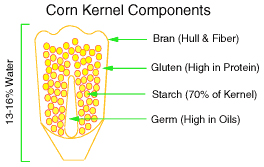 “This research is demonstrated proof of the viability of ‘generation 2.0 ethanol,’” NCERC Director John Caupert said. “By utilizing existing technologies readily available in the commercial marketplace, the Center was able to produce a biofuel that builds upon the strengths of conventional corn ethanol and the promise of cellulosic ethanol, thus making bolt-on cellulosic ethanol a reality.”