

 Researchers at the University of Florida are looking into the feasibility of using the jatropha tree as a source for biodiesel.
This story from the University’s web site, says the plant is a native of Mexico and produces an oil that is ideal for biodiesel:
“For maybe a year and a half now, I have been working on an idea that here in deep South Florida we can grow a biodiesel crop that does not conflict with food and that we have a comparative advantage in growing,” said Roy Beckford, a Lee County extension agent who specializes in sustainable farm development.
Beckford, who works for the Institute of Food and Agricultural Sciences, has been pushing Jatropha as an alternate crop to South Florida farmers the past couple years through IFAS newsletters.
The hardy trees can live for 50 years and can be ready for twice-a-year harvests just 18 months after planting. Each acre can produce 600 to 1,000 gallons of oil a year… although researchers are working on even more productive varieties. It even grows in land not suitable for other types of agriculture.
Just recently, 1,500 Jatropha seedlings were donated to Lee County by a company called Dream Fuels in hopes of getting the plant established as a biodiesel feedstock in Florida.
 Iowa-based Renewable Energy Group is one of just three companies in the country to earn both BQ-9000 certified statuses from National Biodiesel Accreditation Committee (NBAC). It’s a quality assurance program for the production nd marketing of biodiesel.
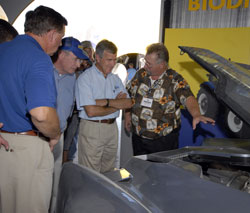 As Cindy mentioned earlier this week, I’m attending the Farm Progress Show in Decatur, IL and biofuels is still a major topic of discussion in agriculture. Many of the booths here are featuring new products that will make the production of ethanol and biodiesel more efficient as we continue to grow our own fuel here in America.
 Owensboro Grain is the latest company to join the ranks of biodiesel producers with the opening of its 50-million-gallon-a-year biodiesel plant.
 A biodiesel start-up in Southern California is getting $8 million in low-cost funding from the State of California. American Biodiesel, Inc. started building a plant at the Port of Stockton in April and will be doing business as a company called Community Fuels.
 State Treasurer Bill Lockyer lauded the state’s move to assist the renewable fuel company.
 Most people would agree, one of the smartest places in the country (and on the Earth, for that matter) is the Massachusetts Institute of Technology… better known as MIT. Well, the school is more than just smart… it’s green!
 In April, the Biodiesel@MIT student group won a $25,000 grant through the Ecomagination Challenge sponsored my mtvU and GE, allowing them to purchase a biodiesel processor. The processor will convert used vegetable oil from dining halls into biodiesel fuel that eliminates sulfur dioxide emissions and produces 68 percent less carbon dioxide than petroleum-based alternatives, according to the group’s Ecomagination proposal.
 With the slogan “Fueling America, Feeding the World,”
 As the