Growing Beyond the RFS to Drive Demand for Ethanol

Joanna Schroeder

After years of uncertainty, the final volumes for the amount of corn ethanol were announced late last year, and corn ethanol is essentially at its limit under the RFS, according to Doug Durante, Clean Fuels Development Coalition (CFDC) executive director.
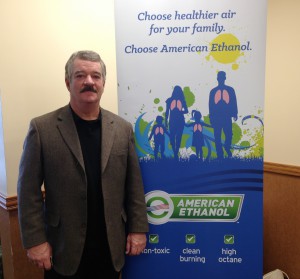
Doug_Durante_CFDCDurante gave a recap of the Renewable Fuels Standard (RFS) and what it means for the ethanol industry during a Nebraska Ethanol Board meeting Jan. 21 in Lincoln. He discussed the regulatory roadblocks that, if eliminated, would open the market for higher ethanol blends.

“The RFS helped kick start the significant volumes of ethanol production we see today, but we cannot rely on the RFS to ensure a continued market,” Durante said. “The industry needs to grow beyond the RFS and create new, consumer-driven demand that capitalizes on the health benefits of ethanol’s clean octane and the ability to meet low-carbon fuel standards.”

Durante suggested that ethanol advocates find additional pathways to create market demand that allows the industry to move beyond the RFS volume obligations. He noted that eliminating the following burdens on ethanol would help create more opportunities for ethanol:

  • Removing unnecessary seasonal Reid Vapor Pressure (RVP) restrictions
  • Raising the minimum octane for fuel
  • Enforcing limitations on levels of toxic aromatics in gasoline
  • Correcting the flawed EPA MOVES model and lifecycle analysis
  • Reinstating meaningful flex fuel vehicle (FFV) credits for vehicle manufacturers
  • Streamlining the certification of higher ethanol blends up to E30

“Given the restrictions and possible expiration of the RFS, the transition to more open and free ethanol markets must begin now,” explained Durante. “Ethanol production and utilization has only scratched the surface of its potential.”


biofuels, Ethanol, RFS

BioEnergy Bytes

Joanna Schroeder

  • BioEnergyBytesDF1In a joint venture, Kyocera Corporation and Century Tokyo Leasing Corporation have announced that Kyocera TCL Solar LLC has started construction of the world’s largest 13.7 MW floating solar power plant on the Yamakura Dam reservoir, managed by the Public Enterprises Agency of Chiba Prefecture in Japan for industrial water services. Scheduled for launch in FY2018, the plant will be comprised of approximately 51,000 Kyocera modules installed over a fresh water surface area of 180,000m2 The project will generate an estimated 16,170 MWh per year.
  • Visiongain has calculated that the global offshore wind market will see capital expenditure (CAPEX) of $21,610m in 2016, including spending on turbines, foundations and installation services. This report addresses the development of the global offshore wind market, analysing the prospects for the three submarkets and ten key national markets. It focuses on CAPEX for the EPC of projects for 2016-2026, and also includes offshore wind capacity forecasts for this period.
  • ComEd received a $4 million award from the U.S. Department of Energy SunShot Initiative to design and deploy solar and battery storage technology within its planned microgrid demonstration project in Chicago’s Bronzeville neighborhood. This award will enable the most sophisticated solar project in the Midwest, while also helping ComEd and the communities we serve learn more about important technologies that will make for a more secure and green energy future.
  • During the 35th Energy Efficiency Forum in Istanbul the European Bank for Reconstruction and Development (EBRD) and the Clean Technology Fund (CTF) announced they are initiating a program to fund exploratory drilling investments in order to tap into Turkey’s large geothermal resources. The new $125 million aptly-named PLUTO initiative will provide funds and advice to private developers in order to lower the risks associated with the initial stages of geothermal projects, according to EBRD.
Bioenergy Bytes

Researchers Feed Algae Cleaner CO2 for Biodiesel

John Davis

melbourne1Researchers in Australia have found a way to feed cleaner carbon dioxide to algae, which would help in the production of biodiesel. This news release from the Melbourne School of Engineering says the new method purifies the carbon dioxide that is in power station flue gases by absorbing it into a liquid.

This liquid is then pumped through hollow fibre membranes. These hollow fibre membranes are like very long drinking straws, which can be immersed into the microalgae beds.

Professor Sandra Kentish, Head of the Chemical Engineering Department at the University of Melbourne and leader of the research team said that supplying purified carbon dioxide by extracting it from flue gases can work, but it is expensive and takes a lot of energy.

“In this work, we have found a way to purify the carbon dioxide and to supply it to the microalgae for a much more moderate cost and using a lot less energy,” Professor Kentish said.

“The CO2 moves directly from the liquid into the microalgae culture by permeating through the fibre walls. Aside from being a cheaper approach, our research has shown that the microalgae grow faster than in other work done to date,” said another team member, Dr Greg Martin.

The process can be used to produce other products such as chemicals, proteins and nutraceuticals.

algae, Biodiesel

Biodiesel Helps Plows Beat East Coast Blizzard

John Davis

snow1As folks on the east coast have battled an historic blizzard this past weekend, some of the removal of the more than two feet of snow on the roadways has been done by plows running on biodiesel. This article from Bay Weekly from Annapolis, Maryland, says the green fuel went a long way in exposing the black roadway underneath that blanket of white.

When snow falls, George Sharps goes to battle.
As you read weather reports, he is revving his plow to be ready to fight his nemesis.
Sharps is one of 350 Maryland State Highway Administration operators who brave conditions that should keep the rest of us home. His mission: to clear 17,000 miles of state roads. He has one request of the citizens of Maryland as we send him into battle: “Stay home and let us do our jobs.”

Reducing Collateral Damage
Like any battle, snow-fighting operations have collateral damage. Roads are mauled and the environment — from your lawn to the atmosphere to Chesapeake Bay — ­assaulted.
Heavy diesel equipment consumes fossil fuels and belches out air pollution. The thousands of tons of salt and chemicals spread to melt snow and ice raise the sodium and chlorine levels of both groundwater and surrounding streams that feed the Bay.
New technologies and techniques are reducing the number of trucks on the road, hence the amount of fuel burned…

“Over the past few years, we’ve developed innovative ways to fight snow more efficiently with less environmental impact,” spokesman Charlie Gischlar told me the day I got behind the wheel of the crew’s main battle plow.

To control emissions and lessen the fossil fuel impact, this winter’s fuel is five percent biodiesel, derived from renewable resources like soybeans.

The article goes on to say that using biodiesel is just part of a bigger plan of Maryland going green when it comes to the black ribbon of highways.

Biodiesel

Record 2015 Biodiesel Numbers Kick Off #NBB16

Cindy Zimmerman

News that biodiesel set new volume records in 2015 set the stage Monday for the 2016 National Biodiesel Conference and Expo in Tampa, Florida.

nbb-16-jobe-1According to new EPA data, consumers used a record of nearly 2.1 billion gallons of biodiesel last year, demonstrating biodiesel’s rising popularity and its success as the first EPA-designated advanced biofuel to reach commercial-scale production nationwide.

“We just came through a two and a half year period of very difficult struggle because of the EPA’s delay in issuing the rule-making on the Renewable Fuel Standard,” said National Biodiesel Board CEO Joe Jobe. “We’re positioned to break a record again in 2016.”

The theme of the biodiesel industry’s 13th annual conference this year is Coast to Coast, which Jobe says reflects the diversity of the fuel. “That diversity gives us a certain amount of strength in terms of our policy and how we utilize very diversified regionally abundant feedstocks,” said Jobe.

The conference really gets underway Tuesday morning when the Expo hall opens and Jobe will lead the opening general session with his state of the industry address. Keep track of all the conference activities on the Biodiesel Conference Blog – and you can also look back on the past 10 years of biodiesel conferences archived there as well.

Listen to my interview with Joe here: 2016 Biodiesel Conference preview with NBB CEO Joe Jobe

2016 National Biodiesel Conference Photo Album

advanced biofuels, Audio, Biodiesel, National Biodiesel Conference

Governor’s Wind Energy Coalition Adds Solar

Joanna Schroeder

The Governors’ Wind Energy Coalition has added solar energy to its lineup of renewable energy promotion and has changed its name to reflect the new addition: Governors’ Wind and Solar Energy Coalition (GWSC). The Coalition’s goal is to support renewable energy technologies that among other benefits, help to put Americans to work in all 50 states.

Screen Shot 2016-01-24 at 9.45.48 PM“We are proud of Iowa’s leadership in wind energy and we are also encouraged by the recent growth in solar energy,” said Iowa Governor Terry Branstad who just last week highlighted Iowa as one of the country’s leading wind power producers. “The addition of solar to the Coalition’s portfolio represents a commitment to future economic and renewable energy growth, and further diversification of our nation’s energy portfolio.”

Rhode Island Governor Gina Raimondo said of the announcement, “I support the foresight of my colleagues to broaden the Coalition’s focus and include solar energy development as a policy priority. Wind and solar provide complementary benefits to the U.S. electric grid and will help diversify the country’s energy mix. The need for states to take a broader view of renewable power is clear.”

According to SNL Energy, wind and solar energy added 61 percent of all new generation capacity in 2015 through November. As states make plans to comply with the Environmental Protection Agency’s (EPA) Clean Power Plan, wind and solar power are expected to continue supplying large amounts new electricity in the years ahead.

“I am proud to work with governors from across the country, and both parties, to advance renewable energy. The exciting growth of both wind and solar energy provide our states with tremendous economic opportunities, as well as the ability to reduce emissions, protect public health, and build a more prosperous and sustainable American clean energy future,” said Washington Governor Jay Inslee.

According to the American Wind Energy Association (AWEA), wind power has surpassed the 70 gigawatt (GW) milestone of installed wind capacity. Per AWEA, if the pace continues, wind power can become one of the largest sources of electricity in the U.S. by supplying 35 percent by 2050. Tom Kiernan, AWEA CEO noted the group has been very effective in getting policy results that help grow the wind energy industry, and said the decision to combine forces with solar energy reflects the economic and environmental value of diversifying the country’s electric grid.

Clean Energy, Clean Power Plan, Electricity, Solar, Wind

Ethanol Report on Media, Politics and the RFS

Cindy Zimmerman

ethanol-report-adWith the Iowa caucuses coming up February 1, the Hawkeye State has been inundated with both candidates and reporters, and ethanol has become a topic for mainstream media to report about, often inaccurately. In this Ethanol Report, Renewable Fuels Association (RFA) president and CEO Bob Dinneen discusses the inaccurate terms being used to describe the RFS, urges the media and voters to do independent research, and gives his thoughts on the views of Republican candidate Sen. Ted Cruz of Texas.

Ethanol Report on Media, Politics and the RFS
Audio, Ethanol, Ethanol News, Ethanol Report, politics, RFA, RFS

Pattern Energy Completes Amazon Wind Farm

Joanna Schroeder

The 150 MW Amazon Wind Farm Fowler Ridge project, located in Benton County, Indiana has been completed and is fully operational. Pattern Energy Group’s wind farm will sell 100 percent of the energy produced to Amazon Web Services (AWS) to power their datacenters.

“It’s a privilege to team with AWS on the Amazon Wind Farm Fowler Ridge, demonstrating the strong and growing appetite for wind power from the country’s leading corporations,” Amazon Wind Farm turbinesaid Mike Garland, President and CEO of Pattern Energy. “This facility was completed on schedule and we are beginning 2016 with all 16 of our wind power facilities fully operational. Since our IPO we have grown the portfolio by 119%, underscoring the value of our strategic relationship with Pattern Development and our ability to execute attractive third-party acquisitions.”

The Amazon Wind Farm Fowler Ridge consists of 65 Siemens 2.3 MW wind turbines with ‘Made in America’ components. The turbine blades, nacelles, towers, and transformers were manufactured in the United States. “Siemens is proud that workers at our factories in the Midwest produced the turbines for the Amazon Wind Farm Fowler Ridge, which continues an exciting trend of technology companies and major corporations turning to wind power for their energy needs,” said Jacob Andersen, CEO Onshore Americas, Siemens Wind Power and Renewables Division.

According to the American Wind Energy Association (AWEA), companies such as Amazon, are helping to boost wind power in the U.S. with direct wind energy contracts. In other examples, Microsoft and Walmart have both contracted directly with companies to build wind farms to generate electricity for their operations.

Jerry Hunter, vice president, Infrastructure at AWS said of the project completion, “AWS has a long-term commitment to achieve 100% renewable energy usage for our global infrastructure footprint, and we continue to make progress towards this goal. We’re very excited to announce with Pattern Energy that the Amazon Wind Farm Fowler Ridge is now live and producing electricity, bringing a new source of clean energy to the grids that power our datacenters.”

Clean Energy, Electricity, Wind

Book Review: Power From The People

Joanna Schroeder

“We must take rapid, effective, innovative action to change the ways we generate and use energy; renewable energy is ubiquitous, offering a new model of energy generation that is local, democratic, and free from the abuses of a centralized monopoly.

Power From the PeopleThis week I focus on community energy. The call to action above is from the Energy Democracy, Renewable Communities Alliance and leads off the last chapter of Power From The People,” by Greg Pahl. The book discusses how to organize, finance and launch local energy projects. While the book is now a few years old, the information in which it contains is still valuable.

Local energy, writes Pahl, is the result of rethinking energy to look at ways of becoming more energy-resilient that don’t necessarily rely on centralized corporate-dominated utilities. “Simply stated, local energy projects rely on locally available renewable energy resources that service local needs.”  This can be solar, wind, biomass, ag waste, and more and in some instances can become regional projects such as a hydropower project.

The book walks the reader through the current energy situation from a climate and economic perspective and discusses why and how to “rethink” energy. Pahl then moves to how a consumer can make his/her home energy resilience and then how a community can become energy resilient. Throughout the dialogue, Pahl provides examples of successful projects – even some that took years and a lot of creative thinking to come into fruition. He also offers four core principles of community energy.

  • Community Ownership, Community Benefit: Ensuring that projects meet broader  needs of the community including the health of the local economy and environment.
  • Renewable, Local, and Distributed: Renewables by definition won’t run out, so they are ideal for building local energy security.
  • Adaptive Resilience: A community is not going anywhere, so the ability to adapt to changing conditions is essential.
  • Conservation First: We must reduce the overall amount of energy we use.

Read More

book reviews, Clean Energy, Renewable Energy

BioEnergy Bytes

Joanna Schroeder

  • BioEnergyBytesDF1The nation’s mayors released a new survey report showing how cities are deploying solar electricity systems, LED lighting and low-energy buildings to meet their energy and climate goals. Released at the Conference’s 84th Winter Meeting in Washington, D.C., the findings show mayors overwhelmingly identified these three technologies to be the “most promising” technologies for curbing climate emissions and reducing energy use in their cities.
  • Renewable Energy Systems has announced the sale of the Bluestem Wind Project to Exelon Generation, one of the nation’s leading power producers. Exelon Generation is the nation’s 12th largest wind producer with a combined 1,500 megawatts of wind generation and more under construction.
  • 2015 marked a banner year for solar power in North Carolina as Duke Energy companies set a record for the amount of solar energy they added in the state — more than 300 MW, enough to power about 60,000 average homes at peak production.
  • SolarCity has announced SunRaising, a referral program that allows nonprofit organizations to raise funds by encouraging members to adopt solar. Each time a supporter of a specific SunRaising partner organization signs up, SolarCity will donate $200 to that organization. Homeowners who go solar through a SunRaising partner will also receive their system’s first month of power for free from SolarCity as a thank you for helping their local nonprofit.
Bioenergy Bytes