

 Clean energy innovator Clean Diesel Technologies, Inc has struck a deal with Stuttgart, Germany-based Bosch GmbH, a leading global supplier in the areas of automotive and industrial technology, customer goods and building technology, to allow Bosch access to key patents developed by Clean Diesel for selective catalytic reduction (SCR).
 Dr. Walter Copan, Executive Vice President and Chief Technology Officer of Clean Diesel (you might remember my May 24th interview with him) says SCR is the preferred method of reducing oxides of nitrogen (NOX). He says Bosch applying Clean Diesel’s ideas to their motor supplies will mean a low-cost method of fixing biofuels problems with NOX.
“The unfortunate downside of biodiesel has been seen in some of the older engines (with biodiesel increasing the formations of NOX),” said Copan. “With the NOX control technology, such as SCR, there’s full compatibility with a high-quality biodiesel or biomass liquid fuels.”
Copan adds this new technology will mean more engines will be able to run more efficiently and cleanly.
“The SCR technology is very fuel flexible. Ultimately the goal is to have a system that is robust, that provides overall good fuel efficiency, and delivers the kind of environmental performance with a view to overall sustainability in the years to come.”
You can hear more of my interview with Dr. Copan below. More information about Clean Diesel Technologies is available at www.cdti.com.
[audio:http://www.zimmcomm.biz/audio/CopanBoschIntvw.mp3]
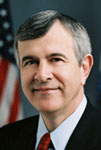 Ethanol continues to get more than its fair share of blame for higher food prices, but Agriculture Secretary Mike Johanns urges people to look at the whole picture.
 Vernon County lies in west-central Missouri on the Kansas border, with roads and rail lines that would easily connect the plants with farmers in both states supplying the corn and soybeans.
 USDA’s Natural Resources Conservation Service is on the forefront of developing plants that could be used as future energy sources through the
  “The Plant Material program began back in the middle ‘30s when the Soil Conservation Service was established,” Escheman said. “We are now getting into bioenergy where we are working with universities and other producers.”
 There are 27 regional NRCS Plant Materials centers nationwide, including one in
  University of Missouri researchers are testing to see if glycerin, left over from biodiesel production, is a viable feed source for beef.
 “We’re really looking at the energy value and how it compares to corn,” Kerley said. “When the animal consumes glycerin, it’s absorbed, and the glycerin is used to make glucose. Actually, it’s like feeding sugar to a cow. Because it’s liquid, there are two things we worry about – one, how much can be used in the diet before it changes the form of the diet; and two, is there a limit to how much glycerin can be processed by the animal? We’ll feed it to them for a period of 160 to 180 days.”
 I think I know how Don Scott feels. Don works for the
  Tyson is defending the use of a biodiesel tax credit by the meat-producing giant and oil giant ConocoPhillips.
 It looks like it’s truly the end of the road, or the water in this case, for a biodiesel-powered boat trying to set a record for a ’round-the-world trip.
 As I was in the homestretch of my 500-plus mile trip, burning plenty of $3.25/gallon gas, I noticed an alternative fuel source turning above the farm fields just a few miles off Highway 71… windmills.
 For years, I’ve seen the turbines in the distance. Now that I’m reporting on this type of energy source, I decided to get a closer look. Turning at a corner where many times my family and I have stopped for gas and snacks, we made our way to where the white turbines turn in the constant breeze of an area known as Buffalo Ridge… a high spot of land that seems to catch every breeze… and a natural for the approximately 260 turbines along its flat plateau. Locals say it is one of the largest wind farms in the world. It’s no wonder nearby Storm Lake earned its name and reputation of constantly have a significant chop on its shallow waters.
 In the meantime, I thought about the gas station back on the corner of Highway 71 where I turned. In front of the pumps is a concrete statue of a dinosaur, symbolic of the fossil fuel that flows from those pumps. I thought how fitting a symbol for that type of fuel. Dinosaurs are extinct and won’t be coming back. Much like the concrete in the statue, the oil industry in many ways is immovable – stuck in a dwindling supply that will become extinct in its own time, maybe sooner than we think. Contrast that with the constant motion of the turbines. If the wind supply is ever exhausted, we’ll have more problems than how to light our homes. Even the more stationary corn and soybean fields below the wind generators hold the promise of renewable fuel in the form of ethanol and biodiesel.
 The wind did have some drawbacks. When we finally arrived at our destination of Spirit Lake, the wind was fueling some good-sized waves… too big to let me chase the much-desired walleyes and northern pike like I would like to. At least for a while. The next day the winds calmed, and we picked up plenty of walleyes… and the biggest pike my Dad has got in more than 70 years of fishing – 37″ long, weighing 10 pounds. That’s big enough to make even a concrete dinosaur smile.
 One former and two current Democratic presidential candidates are sponsors or co-sponsors of a bill introduced by Senator Amy Klobuchar (D-MN) intended to expand consumer access to 85 percent ethanol fuel, or E-85. Primary sponsors of the bill with Klobuchar include Barack Obama, (D-IL), Kit Bond (R-MO), George Voinovich (R-OH), and Dick Durbin (D-IL). Senators Ben Nelson (D-NE), Debbie Stabenow (D-MI), Sherrod Brown (D-OH), Hilary Clinton (D-NY), Claire McCaskill (D-MO), and John Kerry (D-MA) are also co-sponsors of the legislation.