

 An article that ran in the British newspaper, the Guardian, claimed that the World Bank had kept secret a report that said biofuels were responsible for 75 percent of the rise in food prices. But now it turns out that the report was not secret and the number was not nearly that high.
This story in the Wall Street Journal says the World Bank is making it known that the Guardian just didn’t get it right:
Bob Davis of the WSJ spoke with Donald Mitchell, the author of the draft report—which wasn’t secret at all, but a working paper. And like all working papers, it doesn’t reflect the official position of the World Bank.
The report was meant to contribute to a World Bank position paper on rising food prices, which was released at the Bank’s spring meeting in mid-April.
The final April report didn’t include his specific calculation. But, Mr. Mitchell says, “I never saw that as political.” Instead, he says he believes the changes were made because of “editing.” He said that he has been encouraged by World Bank management to explore the issue of biofuels and the overall rise in food prices. “I had input” into the final report that was released at the spring meeting, he said.
Now, because of the misinformation put out by the Guardian, the World Bank is trying to finish up the report by the end of this week to set the record straight. A draft of that report indicates that higher energy prices are the real culprit for any rise… something that biofuels backers, such as National Biodiesel Board CEO Joe Jobe, has been saying all along and reiterated that point today:
 “The U.S. Secretaries of Agriculture and Energy say that biofuels-related feedstock demand plays only a small role in global food supply and pricing. Worldwide, the estimated increase in the price of soybeans and soybean oil would increase the global food commodity price index by 1-2 percent. In the U.S., according to the Department of Energy and USDA, food prices have increased by about 4.8 percent. Of that increase, ethanol and biodiesel consumption accounted for only 4 or 5 percent while other factors accounted for 95-96 percent of the increase.

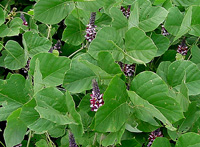 Making ethanol from a nuisance weed could be an idea whose time has come.
  Doug Mizell is a co-founder of Agro*Gas Industries, LLC, which he promotes on
  Minnesota Corn Growers treasurer Chad Willis says corn growers will be out at the events, talking to the fans and promoting ethanol. “For the past few years we’ve done an ethanol trivia contest with the t-shirts as a prize,” said Willis, who is a farmer from Willmar and one of the volunteer coordinators for the event. “It’s a great way to get our message across because it has the crowd listening carefully so they know the answer if they get called up. The best way to learn something is to learn it and repeat it.”
 It’s the middle of summer, and the last thing on students’ minds is how they’ll get to school. But those rides to classes this fall might be a bit cleaner as more schools across the country switch their buses over to biodiesel.

 Officials from
  The letter reads in part, “Were it not for the increasing production of world biofuels producers, oil consumption would expand by 1 million barrels per day. As the leaders of the world’s most industrialized nations, you can imagine what would happen to oil prices in the absence of biofuel production.”
 The biofuel industry leaders also cautioned against the unfounded assumptions being made regarding biofuels’ role in rising food prices, noting that stronger commodity prices provide the necessary incentives to spur increased grain production worldwide.
 Appropriately on Independence Day weekend, it was an all-American win for the Rahal Letterman team, which is sponsored by the ethanol industry – including ICM, POET and Fagen – with driver Ryan Hunter-Reay at the wheel.