

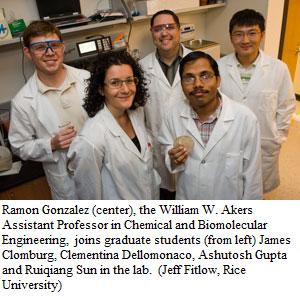
 Researchers at Rice University are finding more uses for the glut of glycerin brought about by the rise in popularity of biodiesel.
A story from the school says the researchers have found a way to use E. coli and other bacteria to turn glycerin into chemicals formate, succinate and other valuable organic acids. The article says the work is being featured in the journal Metabolic Engineering:
“Biodiesel producers used to sell their leftover glycerin, but the rapid increase in biodiesel production has left them paying to get rid of it,” said lead researcher Ramon Gonzalez, Rice’s William W. Akers Assistant Professor in Chemical and Biomolecular Engineering. “The new metabolic pathways we have uncovered paved the way for the development of new technologies for converting this waste product into high-value chemicals.”
About one pound of glycerin, also known as glycerol, is created for every 10 pounds of biodiesel produced. According to the National Biodiesel Board, U.S. companies produced about 450 million gallons of biodiesel in 2007, and about 60 new plants with a production capacity of 1.2 billion gallons are slated to open by 2010.
A year ago, this same team of Rice researchers found a way to convert glycerin into ethanol… at a cost of only about 40 percent of getting the green fuel from corn. This latest discovery is expected to help the bottom line of biodiesel producers.
 Regulators have given Iowa-based Renewable Energy Group (REG) the green light for finalizing its buy of a U.S. Biodiesel plant in Houston, Texas.
 Greg Anderson, a family farmer who grows soybeans near Newman Grove, Nebraska (and serves as an ex-officio member of the United Soybean Board Executive Committee) makes some pretty strong arguments that there is not a great food shortage brought on by the rise in popularity of biodiesel:
 City vehicles in Jacksonville, Florida’s will be running more and more on biodiesel… and the green fuel will help clean up the city’s waste.

 The
The  Putting the acreage report in context with respect to America’s ethanol industry,
  Another representative of Fagen Incorporated has joined the ranks in the
  Sixty days after it left port in Sagunto, Spain… and 14 days ahead of the previous world record… the 100 percent biodiesel-powered boat, Earthrace, has finished circling the globe faster than any other boat ever has before.