

 Volkswagen will be running B5 biodiesel in all its race cars, transport vehicles and generators during the 2009 Jetta TDI Cup season.
This press release says they’ll be using the green fuel provided by Houston-based HYPERFUELS:
“We are extremely pleased to have HYPERFUELS as a partner for the 2009 Jetta TDI Cup series. SynDiesel(R) B5 biodiesel has been fully approved for use in all Volkswagen TDI powered vehicles that are available at local Volkswagen dealerships today,” said Clark Campbell, Motorsport Manager, Volkswagen of America, Inc. “The addition of SynDiesel B5 biodiesel in the Jetta TDI Cup race cars further demonstrates the feasibility of biodiesel as an alternative fuel source for American consumers and supports the clean and green racing of the Jetta TDI Cup series,” added Campbell.
Performance testing has proven that diesel powered vehicles offer more low-end torque than traditional gasoline engines, providing quicker off-the-line acceleration that’s well suited for the race track. In addition, the Jetta TDI engine’s use of a “common rail” direct injection system improves fuel economy over gasoline engines and reduces sooty emissions by 95 percent, even under demanding race conditions. During the 2009 season, the Jetta TDI Cup cars will consume approximately two tanks of B5 biodiesel during race conditions and overall carbon emissions produced by the series will be reduced by 2,583 pounds as a result of the new fuel. These environmentally-friendly characteristics classify all Volkswagen TDI models as Advanced Lean Technology Vehicles, qualifying consumers for a $1,300 Federal Income Tax Credit.
“HYPERFUELS is excited that the 2009 Volkswagen Jetta TDI Cup and SCCA Pro Racing acknowledge that the addition of biodiesel creates a clean performance racing fuel,” said Jess Hewitt, President, Gulf Hydrocarbon, the parent company of HYPERFUELS. “If we can help take biodiesel awareness and performance to the next level, then everyone wins. It’s cleaner burning, yields a faster burn, produces less emissions and is easily accessible. I can’t imagine a better fuel or better cars to showcase the performance and benefits of biodiesel,” added Hewitt.
Officials say this brand of biodiesel has 20 percent more BTUs than petroleum diesel. No wonder they’re using it in racing cars.


 Just moments ago, Pres. Barack Obama, in his first State of the Union Address, laid out his plan he believes will lead to the recovery of the U.S. economy. And alternative energy could wind up being a big winner as part of the plan.
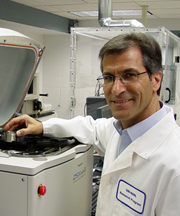 Lou Honary, a professor and director of the National Ag-Based Lubricants Center at UNI, says while biodiesel and ethanol produced from traditional crops of soybeans and corn are the obvious choice for the Midwest… despite the criticisms from some city cousins… a diversity of feedstocks and energy sources needs to be the country’s goal:
 Novozymes has been vocal about its commitment to bringing process improvements and lower enzyme costs to market by 2010. They estimate that with the lower enzymes costs a gallon of cellulosic ethanol can be produced for $2.25 per gallon by 2010, which cuts costs by more than half from only 2 years ago while making it competitive with corn-ethanol.
 Indirect land-use affects of corn-based ethanol would be “small” reported Thomas Darlington, with Air Improvement Resource, Inc., today during a special press conference as part of the National Ethanol Conference. Darlington has been working with RFA to help legislators, in particular the California Air Resources Board (CARB) and Environmental Protection Agency (EPA) better understand Land-Use Change. Indirect land use research is still in its infancy in terms of the scientific research behind the issue.
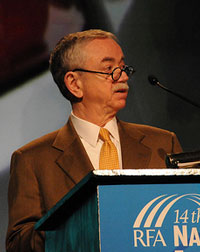 Introducing Jim Ford with API, Renewable Fuels Association president Bob Dinneen stressed the importance of working with the petroleum industry. “They’re our customers, they’re the ones bringing our product to the consumer, so we have to work constructively with them,” said Dinneen.
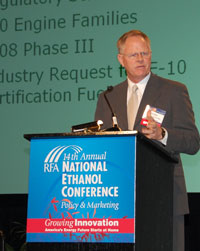 Kris Kiser, Executive Vice President of the Outdoor Power Equipment Institute, spoke to the National Ethanol Conference on a Marketing Higher Level Blends panel.
 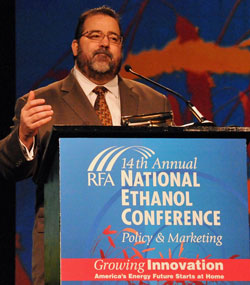 “Some look at what we’re up against and see “an industry in crisis.” I look at what we’re up against and see an industry with the perseverance and determination to succeed,” said Dinneen in his annual address this morning at the National Ethanol Conference in San Antonio.