A press release by Growth Energy highlights a new study that shows greenhouse gas emissions of gasoline from foreign oil are at least twice what was previously thought when the indirect greenhouse gas (GHG) emissions related to military operations in the Middle East are taken into account. The study is published in “Biofuels, Bioproducts & Biorefining”.
 The study comes as indirect GHG emissions has been made a major issue by the California Air Resources Board (ARB) as it prepares to approve regulations for its Low Carbon Fuel Standard. In a CARB staff report submitted to the board for adoption, biofuels are the only fuel that has indirect effects included in their carbon accounting. Despite this new study, no indirect effects are included for petroleum-based fuels. Critics of California’s regulations have argued that applying an indirect penalty to biofuels is unfair as it sets different standards for determining a fuel’s carbon intensity. California currently imports more than 45 percent of its oil from foreign sources.
“This research is the latest example of significant indirect sources of greenhouse gas emissions that the ARB has either overlooked or ignored. It is incomprehensible that ARB staff would suggest penalizing biofuels for indirect effects, when it is clear gasoline – ethanol’s primary competitor – has a whole host of indirect effects that have not been accounted for,” said Tom Buis, CEO of Growth Energy. “In light of this important research, ARB has to delay the adoption of an indirect penalty for biofuels until the indirect effects of all other fuel pathways have been determined so that the Low Carbon Fuel Standard is fair and equitable.”
To view the entire study, click here.
 There is a glimmer of hope that all the input being provided is being heard by officials making the decision, according to a letter received this week by
  Motorists in Grand Island, Nebraska now have a range of choices at the pump when it comes to ethanol blended gasoline.
  President Barack Obama was in Iowa for this Earth Day, visiting a former appliance maker that has converted to make parts for the state’s burgeoning wind energy industry.
 The amount of industrial fats and oils in the U.S. has grown by nearly one-fourth over the past couple of years, fueled mostly by the growth in popularity of biodiesel.
 America’s first eco-sustainable city is taking its first steps toward sustainable energy.
 Today’s Earth Day Celebration is brought to you in part by the book, “Green Hell” written by Steve Milloy. I’ve never met or spoken to the man, but I can presume that he is not a celebrator of Earth Day since his entire book is dedicated to stopping the “greens.” The premise of his book is to educate the public on how environmentalists are trying to control our lives and what we can do to stop them. He writes, “While it is beyond the scope of this book to debunk the scientific claims of global warmists, we’ll take a brief moment here to note the fatal flaw of global warming alarmism: there is no scientific evidence indicating that carbon dioxide, much less man made carbon dioxide emissions, control or even measurably impact global climate.”
 solar energy into his business. “Our primary motivator was to produce wines in a way that honors this beautiful coastal area and respects the environment. Conergy’s solutions enable Eos to optimize power generation throughout the day, avoiding the hours of shading confronted by standard systems set to peak hour production,” he noted. “These efficiencies — coupled with the government incentives associated with this project — made the economics of installing these remarkable earth-friendly systems viable,” Hopmayer said.
 Georgia has become the third state to pass a bill requiring suppliers to make available an unblended gasoline grade for marketers who want to make their own ethanol fuels. The measure awaiting the signature of Republican Gov. Sonny Perdue would require refiners to supply a straight-run gasoline for blending by July 1 this year. Refiners also would be barred from interfering with a jobber’s right to blend alcohol or claim federal tax credits on blended fuel, and would have to amend their supply contracts to delete any ban on blend sales.
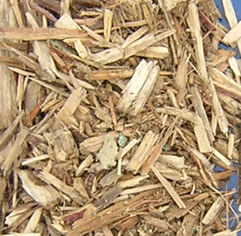 The police department in Hoover, Alabama will soon be receiving wood-based ethanol to fuel their flexible fuel vehicles (FFVs). A Livingston demonstration plant, Gulf Coast Energy, will be producing the ethanol.