

 ESA Renewables, (ESA), a leading turnkey solar solutions provider, has entered into separate multi-year operation and maintenance (O&M) contracts with four solar farms in North Carolina.
The four O&M agreements are with:
- -The Murphy Solar Farm, which is approximately eight acres in size and consists of 4,298 ground-mounted solar panels. The solar installation is located on the grounds of the Martins Creek Elementary School.
- -The Wingate Solar Farm, also located in Murphy, N.C. which consists of 4,340 solar panels. This solar project has been installed on a tract of land which is approximately seven acres in size.
- -The Culberson Solar Farm located on approximately five acres which is composed of more than 3,400 solar panels.
- -The Holiness Solar Farm which consists of 4,242 solar panels and is located on approximately nine acres.
A lead engineer and other O&M technicians will utilize ESA’s proprietary monitoring system which has been installed on each solar array to ensure maximum performance, reduce system downtime, and make informed decisions as to O&M services. ESA’s employees are also factory authorized and qualified to install and service advanced energy’s inverters which were used in the initial construction of the solar farm.
“ESA is proud to have designed and engineered a renewable energy technology that is an ideal O&M solution to maximizing energy generation,” Jeffrey Burkett, president of ESA Renewables. “We look forward to integrating our technology on many other renewable energy power plants in the near future for effective monitoring and control.”
 In a joint statement,
 The groups filed their suit on December 24, 2009 and asserted that the California LCFS violates the Commerce Clause by seeking to regulate farming and ethanol production practices in other states. The Commerce Clause specifically forbids state laws that discriminate against out-of-state goods and that regulate out-of-state conduct. With its original filing, the groups noted, “The LCFS imposes excessive burdens on the entire domestic ethanol industry while providing no benefit to Californians. In fact, in disadvantaging low-carbon, domestic ethanol, the LCFS denies the people of California a genuine opportunity to clean their air, create jobs, and strengthen their economic and national security. One state cannot dictate policy for all the others, yet that is precisely what California has aimed to do through a poorly conceived and, frankly, unconstitutional LCFS.”
 In a
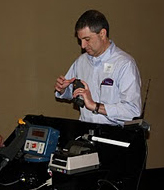 GROWMARK Information Management Solutions director Keith Milburn says wEBS was developed as a fuel billing solution that makes the record keeping process easier by providing instantaneous information such as fuel type, tank sizes, taxes and credits.
 “There’s two components of wEBS,” Milburn says. “There’s the back office or centralized data set and then the hand held on the truck level.” The back office includes not only customer information, but every tank that each delivery truck services. “The system identifies each tank with a bar code that tells who the customer is, what product types, relevant taxes, discounts, and if there have fuel contracted at a certain price,” Milburn explains. So all the delivery driver has to do is pump the fuel and within minutes the transaction is recorded and an email confirmation is sent to the customer.
 “EPA has essentially reduced the mandate for cellulosic, recognizing the fact that there aren’t supplies out there to meet it,” said USDA chief economist Joe Glauber.



 After