

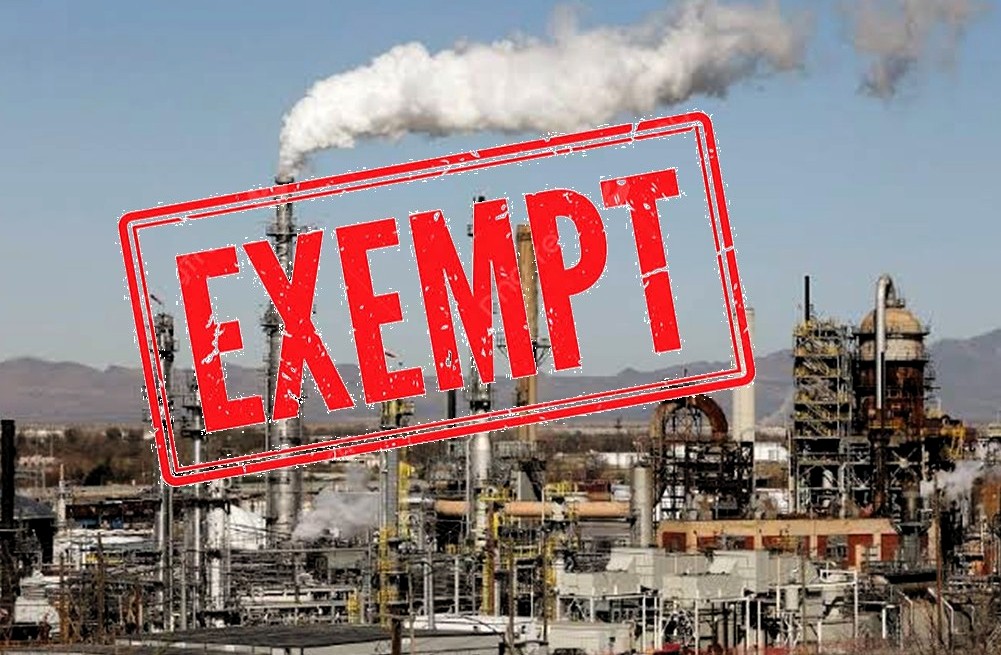
 The Environmental Protection Agency today announced its decisions on 34 individual small refinery exemption petitions for the 2025 compliance year, granting full (100 percent) exemptions to 18 petitions, partial (50 percent) exemptions to 11 petitions, denying three petitions, and determining two petitions to be ineligible.
Based on that analysis, EPA is exempting 1.76 billion RFS compliance credits, known as Renewable Identification Numbers (RINs), for 29 small refineries. EPA will propose to reallocate 100 percent of the difference between projected and actual exempted volumes for 2025 SREs into the 2026 and 2027 Renewable Volume Obligations (RVOs) before the end of October 2026.
Due to the agency’s 2025 SRE decisions, EPA will also be announcing a direct final rule to extend the 2025 RVO compliance date by 30 days to October 1, 2026. This will allow the market to appropriately account for the additional RINs.
Renewable Fuels Association President and CEO Geoff Cooper said they still believe most of the SREs issued are completely unjustified but they are somewhat encouraged that EPA is taking steps to minimize the damage through reallocation. “The proposed plan laid out by EPA today creates a pathway for ensuring no net loss in renewable fuel demand, and it is crucially important that the agency moves quickly to faithfully implement this approach. At a time when oil refiners are reporting record-high profit margins, gasoline supplies are tightening, and consumers are paying record-high prices at the pump, the administration should focus on efforts to increase—not decrease—the domestic production and use of more affordable biofuels like ethanol,” said Cooper.
“The RFS has been in place for more than 20 years, and Congress never intended for SREs to be a permanent entitlement for Fortune 500 oil refining companies,” Cooper added. “The exemptions were always meant to be a temporary measure to give truly small, independent refiners a little more time to come into compliance with the RFS program. Unfortunately, many so-called small refiners have been allowed to exploit this loophole for two decades, putting American consumers, farmers, and biofuel producers on the losing end.”
American Coalition for Ethanol (ACE) CEO Brian Jennings also stressed the implications the SREs pose for agricultural producers. “American farmers continue to struggle to make ends meet, while oil refineries are posting record profits. In this context, it does not make sense to exempt any refiners from blending low-cost renewable fuels into their outrageously expensive petroleum products,” said Jennings. “Nevertheless, we appreciate that EPA is taking steps to reallocate the exempt volume to non-exempt refiners and look forward to seeing that promise fulfilled. Until reallocation is final and complete, every exempted gallon is an economic drain on rural America.”
Jennings expressed concerns about the impact today’s action might have on work to get nationwide, year-round E15 passed by Congress. “This SRE controversy has essentially hijacked efforts in the Senate to finally adopt legislation simply allowing retailers nationwide to sell low-cost E15 to their customers year-round. Given EPA’s actions today, we once again call on the Senate to work in a bipartisan way to get E15 legislation over the finish line this year,” said Jennings.