

 The Wisconsin Biodiesel Association is opening its monthly meeting on Wednesday, Sept. 25th at 9:30 a.m. at the Wisconsin DNR office in Madison to the general public.
This story on Wisconsin Ag Connection says it’s an effort to educate people about the benefits of biodiesel in the state:
WBA President Jeff Pieterick says the group has prepared a particularly informative series of presentations that will offer a substantial overview of the biodiesel industry in Wisconsin.
“Please join with us to learn about the exciting developments, the opportunities, and the challenges that bear impact upon Wisconsin’s effort to develop ‘Homegrown fuel for a better Wisconsin,'” Pieterick says.
The agenda includes a legislative update with Attorney John Wilson of Michael, Best & Friedrich, LLP; a discussion on fuel distribution by Tim Glynn from EH Wolf & Sons; and an update on biodiesel production in Wisconsin by BEST Energies Vice President Tony Janowiec.
Contact Jeff Pieterick at the WBA at (920) 988-4058 for more information.

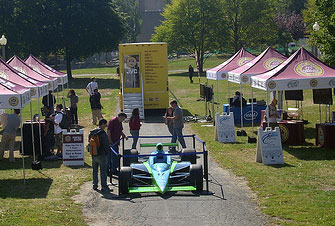 Students can also learn about the series’ partnership with the ethanol industry through interactive displays and experience what it’s like to drive an IndyCar Series car by testing out an IndyCar Series simulator.
  With the resignation of US Agriculture Secretary Mike Johanns last week, the
 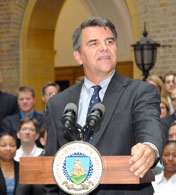 Johanns was scheduled to be the keynote speaker at the event but now Acting Secretary Chuck Conner will be the keynoter.
  The
The 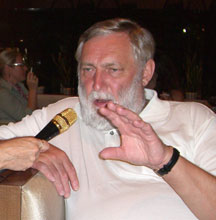 Back in 2003, the European Union instituted some major reforms in its agricultural sector, which are now known as the “Fischler Reforms” after the Commissioner for Agriculture, Rural Development and Fisheries at the time,
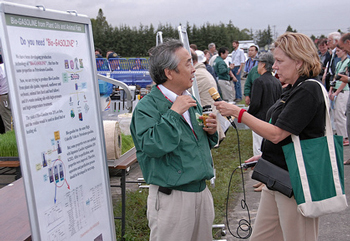 Researchers at
  In a town most famous for peanuts and a president, biodiesel could be the next chapter for Plains, Georgia.
  Smiling Earth Energy has offered the money to help the Chesapeake, Virginia neighborhood of South Hill, which has been cut off from the rest of the city since Interstate 464 bisected the area in 1987.