As the demand for greener fuels grows, so has the demand for vehicles that burn the green fuels. And according to this story posted on C|Net.com, a niche for salesman offering biodiesel-powered cars has grown as well:
“In 2003, I came out of the closet and became a full-blown car dealer,” said Steve Ahl, a former recycled-lumber salesman who is outfitting his used diesel car lot in Ukiah, Calif., with solar panels. “This isn’t the typical suede shoe used car lot operation.”
Ahl Motors TDI Cars has sold some 700 Volkswagen Turbo Direct Injection (TDI) diesels as well as Ford and Honda trucks, and currently stocks 25 models priced between $10,000 and $35,000. Ahl said most customers tell him they want to kick the fossil-fuel habit by using biodiesel.
And the biodiesel bandwagon isn’t limited to just the utilitarian vehicles for middle-classers. The article goes on to say Hollywood is getting in on the act:
 In Los Angeles, publicist Colette Brooks has built a business gussying up vintage diesel cars.
“I have a 1984, rare Lincoln Continental Bill Blass edition that is gold on gold, baby,” she said. “This thing is so pimp; I feel like Barry White when I’m driving. There’s an old-English-meets-gang typeface on the back that says ‘ecology,’ and tinted windows.”
Brooks’ company, BioBling, acquires rare Cadillac, Mercedes Benz and Volkswagen models from around the country, modifies each one for biodiesel and offers customizations such as fake fur interiors, glittery paint jobs and flat-screen televisions.
In fact, she’s looking at having biodiesel-fueled limos deliver participants to next year’s Oscars.


 The Andersons, Inc. announces production has begun at the 110-million gallon ethanol plant in Clymers, Indiana. According to the company, the facility is the largest, dry-mill ethanol plant east of the Mississippi.
 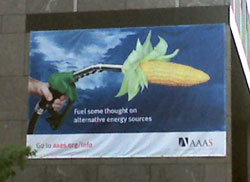 On a walk around my hotel last night here in Washington, DC I saw this building banner for that promoted the
  With the grand opening of POET Biorefining – Corning in Iowa on Friday,
 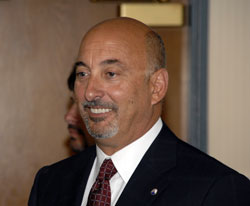 I think Bobby Rahal was a big hit today at the National Press Club. There were a lot of other people from the ethanol industry on the head table but none of them got to speak or answer questions. Everyone was just excited to listen to this great competitor.
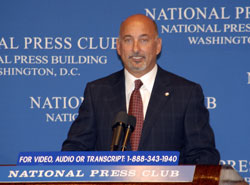 For the first time ever an Indianapolis 500 winner spoke at the National Press Club today. Bobby Rahal was the featured speaker at today’s luncheon with the press. His topic was the “The Greening of Racing: Ethanol Powers the Indianapolis 500.″
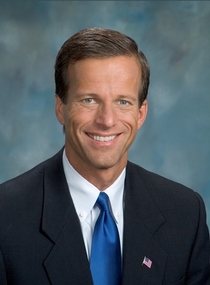 Senator John Thune (R-South Dakota) is asking Congress to extend the Renewable Energy Production Tax Credit, which will expire next year, through 2012. The incentive is a two-cent-per-kWh tax credit for renewable electricity production.
  Members of the National Biodiesel Board have testified before Congress about how biodiesel has benefitted America. According to an