The ethanol industry is responding today to a recent study designed to test vehicle compatibility with E15 and higher blends of ethanol. The study, “Mid-Level Ethanol Blends Catalyst Durability Study Screening,” was conducted by the Coordinating Research Council (CRC), a non-profit organization funded by the auto and oil industry. According to Growth Energy, the research is “inconclusive” because it failed to complete sufficient vehicle testing and it ignored a ‘pile of data’ from academic, government and third-party research that has shown that E15 does not harm engine and emission systems or affect durability or drivability.
 As disclosed in the CRC report, the organization’s aim was to show higher temperatures in certain vehicles using various blends of ethanol. They did in fact accomplish this goal but the average temperature change in the 4 cylinder vehicles was only a 2.0- 2.7 degree increase from E10 to E15 but there was a degree variance of 200 degrees among some of the vehicles. The reason for this could be that some of the vehicles were not designed to run on ethanol blends so the computer systems were not programmed to adjust to the alternative fuels. This said, these computer systems could be re-programmed to run on mid-level ethanol blends with no negative effects.
In addition, CRC did not disclose that of the 25 makes and models chosen for testing, several of them are more prone to catalysis failure than others regardless of the intermediate blend in the tank – meaning that particular car’s design is a bad design and will fail even if using straight gasoline. Read More
 Clean technology company
 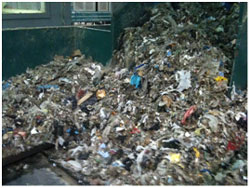 Fiberight provides a new paradigm for environmentally sustainable waste management by offering a strong economic solution for over 60% of the trash stream, by turning it into valuable biofuel as a commercially viable alternative to traditional landfill disposal or incineration. In addition to solving a major trash disposal problem, Fiberight’s biorefineries will fulfill the U.S. Environmental Protection Agency’s mandates under the National Renewable Fuel Standard program (known as RFS2) that provides statutory requirements for the incorporation of renewable biofuel, including cellulosic ethanol, as part of the nation’s transportation fuel. For 2011, the cellulosic standard has been set for 250 million gallons (mg) increasing to 16 billion gallons (bg) by 2022. Fiberight is well positioned to support this renewable biofuel goal as reaffirmed by the Obama Administration under 40 CFR part 80 this past February.
 “Renewable energy production is a key to sustainable economic development in rural America,” Vilsack said. “We must rapidly escalate the production of biofuels to meet the 2022 Federal Renewable Fuels standard goal, and much of this biofuel will come from feedstocks produced by America’s farmers and ranchers. This will be an increasing source of income for rural America and it represents an opportunity to increase the number of green jobs available not only to farm families, but to residents of rural communities.”
 Addressing the tragedy hitting the Gulf of Mexico and coastal areas requires both an aggressive short term response and an equally aggressive long term energy and environmental strategy.