

The ethanol co-product known as DDGs or dried distillers grain is mostly used as livestock feed, but a food grade version could help improve human nutrition.
 South Dakota State University research shows a traditional Asian flatbread called chapathi (or chapati) gets a big boost in protein and fiber when fortified with food-grade distillers grains.
SDSU food scientist Padu Krishnan said it is one example of the ways DDGS could help improve human nutrition worldwide – and provide a new market for the ethanol co-product. Krishnan, a cereal chemist, has been studying and writing about the possibility of using DDGS in human diets since the early 1990s. Especially now with new state-of-the-art ethanol plants coming online in recent years, Krishnan said, the ethanol industry is well poised to make food-grade DDGS.
 In lab studies, Krishnan and his colleagues found that using DDGS to make up 10 percent of the dough in chapathi, an Asian whole wheat unleavened bread eaten in South Asia and East Africa, boosted the fiber from 2.9 percent to 7.8 percent, while using 20 percent DDGS in the dough increased the fiber to 10.3 percent. Protein content also increased by using DDGS in the dough, up to 15.3 percent by adding 20 percent to the dough.
DDGS is ideal for including in human diets because it contains 40 percent dietary fiber and nearly 37 percent protein.
 In a court brief filed last week, the
  However,





 Clean technology company
 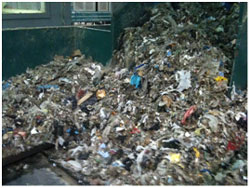 Fiberight provides a new paradigm for environmentally sustainable waste management by offering a strong economic solution for over 60% of the trash stream, by turning it into valuable biofuel as a commercially viable alternative to traditional landfill disposal or incineration. In addition to solving a major trash disposal problem, Fiberight’s biorefineries will fulfill the U.S. Environmental Protection Agency’s mandates under the National Renewable Fuel Standard program (known as RFS2) that provides statutory requirements for the incorporation of renewable biofuel, including cellulosic ethanol, as part of the nation’s transportation fuel. For 2011, the cellulosic standard has been set for 250 million gallons (mg) increasing to 16 billion gallons (bg) by 2022. Fiberight is well positioned to support this renewable biofuel goal as reaffirmed by the Obama Administration under 40 CFR part 80 this past February.