ACE Conference 2026

Plant Makes Fuel from Waste and Fiber

Cindy Zimmerman

An Iowa corn ethanol plant has been converted to produce commercial cellulosic biofuels from fiber and municipal waste.

fiberightClean technology company Fiberight announced today that it has started “commenced production at the nation’s first commercial cellulosic ethanol plant using enzymatic conversion technology and industrial / municipal solid waste (MSW) as feedstock.” According to a company release, Fiberight converted a former first generation corn ethanol plant in Blairstown, Iowa to cellulosic biofuel production. Following a total $24 million investment, the facility will be scaled to final commercial production capacity of approximately 6 million gallons of biofuel per year in 2011.
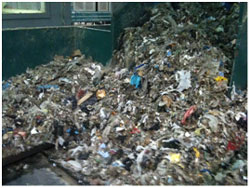
fiberightFiberight provides a new paradigm for environmentally sustainable waste management by offering a strong economic solution for over 60% of the trash stream, by turning it into valuable biofuel as a commercially viable alternative to traditional landfill disposal or incineration. In addition to solving a major trash disposal problem, Fiberight’s biorefineries will fulfill the U.S. Environmental Protection Agency’s mandates under the National Renewable Fuel Standard program (known as RFS2) that provides statutory requirements for the incorporation of renewable biofuel, including cellulosic ethanol, as part of the nation’s transportation fuel. For 2011, the cellulosic standard has been set for 250 million gallons (mg) increasing to 16 billion gallons (bg) by 2022. Fiberight is well positioned to support this renewable biofuel goal as reaffirmed by the Obama Administration under 40 CFR part 80 this past February.

The Blairstown facility will use initial feedstock from paper pulp wastes from a paper plant in Cedar Rapids, IA followed by integration of other industrial wastes and processed MSW from Fiberight’s operations in Lawrenceville, VA. By mid-summer, operations are projected to begin use of MSW from the Benton County municipality and other Iowa landfills. At targeted full production, the Blairstown plant will be processing over 350 tons of wastes per day into valuable biofuel, at a cost of less than $1.65 per gallon.


Cellulosic, Ethanol, Ethanol News

Courts Consolidate Corn Oil Extraction Lawsuits

Joanna Schroeder

In February, DomesticFuel brought you a story regarding GreenShift Corporation’s lawsuit against Big River Resources Galva, Big River Resources West Burlington and Cardinal Ethanol. GreenShift claims that the plants, using ICM’s corn extraction technology, are infringing upon their U.S. patent covering its corn oil extraction technology. In a companion matter, ICM filed a lawsuit against CleanTech, the affiliate of GreenShift Corporation, in federal court in Kansas last October requesting that the court declare CleanTech’s patent invalid. In addition, ICM filed motions on behalf of their plants to stay the proceedings and consolidate them with the Kansas case.

During the past several weeks, courts in Indiana and Illinois has ruled in favor of the ethanol plants and all cases will be tried in the Kansas court alongside the request to invalidate CleanTech’s patent.

Brian Burris, ICM’s General Counsel, stated, “ICM is pleased with the recent rulings by the U.S. District Courts in Indiana and Illinois regarding the litigation proceedings with GS CleanTech. As we have previously stated, ICM strongly believes that GS CleanTech’s alleged patent claims are and will be proved to be invalid. Since our inception in 1995, ICM remains committed to our industry and our customers – whether through creating revenue-enhancing products and services, or assuming their defense in cases such as this.”

Ethanol, Ethanol News

Ethanol Demand a Topic at Clean Energy Forum

Cindy Zimmerman

Agriculture Secretary Tom Vilsack and other administration officials joined rural stakeholders for a clean energy economy forum at the White House on Wednesday, which was the one year anniversary of President Obama’s Biofuels Directive.

clean energy forum“Renewable energy production is a key to sustainable economic development in rural America,” Vilsack said. “We must rapidly escalate the production of biofuels to meet the 2022 Federal Renewable Fuels standard goal, and much of this biofuel will come from feedstocks produced by America’s farmers and ranchers. This will be an increasing source of income for rural America and it represents an opportunity to increase the number of green jobs available not only to farm families, but to residents of rural communities.”


Two panels moderated by the Secretary consisted of administration, academic and science professionals discussing efforts to help rural America build a clean energy economy that creates jobs, reduces our dependence on foreign oil and enhances our competitive position in the global economy.

USDA Chief Economist Joe Glauber discussed the current situation for ethanol, with production outpacing use. “We are producing a lot of ethanol,” said Glauber. “It doesn’t mean we’re necessarily at the blend wall, but there is a lot of production out there for the supply.”

He noted that ethanol stocks have grown. “In February, stock numbers were close to 800 million gallons. That’s a record, that’s about 25 or so days of inventory,” Glauber said.

While the ethanol industry is hopeful that EPA will grant a waiver to allow up to 15 percent ethanol to be blended in regular gasoline, Glauber is doubtful that will be a quick fix. “I don’t think that a change to E15 will transform the situation overnight,” Glauber said, since he believes the transition at the pump level will take some time. If the EPA only grants a partial waiver for E15 in newer vehicle, Glauber says the transition will be even more complicated. “Then there will have to be E10 available for those older cars and E15 potentially available for younger cars, so it’s not a silver bullet for the constraints that we see ethanol production under right now.”

EPA continues to wait on data from the Department of Energy on vehicle testing before they make a final decision on the waiver request.

Ethanol, Ethanol News, Government, USDA

Congratulations! It’s a Biodiesel!

John Davis

The same technology that lets expectant moms and dads know whether it’s a boy or girl in the womb could help biodiesel makers deliver their product quicker.

Discovery News reports that researchers at the University of Missouri’s Agricultural Engineering department are using ultrasounds to speed up the production process from several hours to just a few minutes:

[Assistant Professor Bulent] Koc, an agricultural and biological engineer, had used ultrasound technology as part of his research in the past to look at different properties of food. For example, he figured out concentrations of alcohol in wine by measuring the velocity of the sound waves within the wine and how long they took to bounce back. When he came to the University of Missouri, the agricultural engineering department required him to focus on energy rather than food, so he applied it to biofuel production.

The ultrasonic wave process works like this: a desktop computer-sized device, known as an ultrasound generator, drives an ultrasound transducer, the machine that makes ultrasonic waves pass through a mixture of methanol and vegetable oil. These waves heat the mixture of oil and alcohol, creating bubbles that eventually burst. The bursts release high pressure and temperature, which break the molecular bonds in the fluids, allowing the two liquids to mix at a much faster pace. After the molecular bonds break, the fatty acids release, producing the by-product glycerin, and the remaining molecules recombine into a biodiesel.

“We wanted to see the effects of ultrasonic energy on glycerin separation time, that means reducing the production time of biodiesel.

Unlike the conventional process that takes an hour to produce a few milliliters, this process takes just five minutes to make about the same amount.

And since time is money, the less time biodiesel makers spend brewing the green fuel, the more money they’ll be able to make.

Biodiesel, Research

Ethanol Report on Oil Spill Response

Cindy Zimmerman

Ethanol Report PodcastAddressing the tragedy hitting the Gulf of Mexico and coastal areas requires both an aggressive short term response and an equally aggressive long term energy and environmental strategy. Renewable Fuels Association President and CEO Bob Dinneen is asking the Obama administration to take action to help increase the use of ethanol, starting with immediately allowing up to 12 percent ethanol in gasoline. This edition of “The Ethanol Report” features Dinneen’s comments on actions to promote increased ethanol production and use that could be taken in response to the oil spill in the Gulf of Mexico.

You can subscribe to this twice monthly podcast by following this link.

Listen to or download the podcast here:

Ethanol, Ethanol News, Ethanol Report, RFA

Book Review – The Surprising Solution

Joanna Schroeder

According to Bruce Piasecki in his book, “The Surprising Solution,” globalization has brought new social pressures to the world including climate change, global terrorism, oil wars and oil depletion, billions of poor people, and the need for food, air, water and wood. Yet according to Piasecki, these pressures do not automatically mean a world for the worse – actually the opposite. His goal in the book is to demonstrate that we have reached a tipping point that is actually leading us to a better world through social repsonse capitalism or the S Frontier.

So what exactly is the S Frontier? It is the movement of businesses changing their services and products in order to survive and prosper in a world that is facing the end of oil. Piasecki writes, “In order for them to survive and prosper further, they need to develop and continue to refine the business art of innovation for social needs–they need to find a new and socially responsible way to fill the hole our depleting oil supply is leaving. We call this elaborate social art in business the ‘S Frontier’.”

Piasecki writes that the S Frontier is already here and there are several companies leading the way including Toyota, GE and HP. These are companies that have changed the game of creating more socially responsible products that have had such an impact, others are forced to follow. For those companies who get left behind, they will fail paving the way for those companies that are able to refine and create products that change with the new global marketplace or actually cause the global marketplace to change.Read More

book reviews

Wind Farms Getting Boost from Google

John Davis

Google is getting into the wind energy business.

North American Windpower says the Internet giant is putting more than $38 million into two North Dakota NextEra Energy Resources wind farms that generate about 169 megawatts of energy … Google’s first direct investment in a utility-scale renewable energy project:

“Smart capital includes not only these early-stage company investments, but also dedicated funding for utility-scale projects,” says Rick Needham, Google’s green business operations manager. “To tackle this need, we’ve been looking at investments in renewable energy projects, like the one we just signed, that can accelerate the deployment of the latest clean energy technology while providing attractive returns to Google and more capital for developers to build additional projects.”

The project uses the latest wind turbine technology and control systems, according to Google. The turbines can continuously adjust the individual blade pitch angles to achieve optimal efficiency and use larger blades with 15% more swept area than earlier generations, allowing capture of even more wind energy for each turbine.

Even the control systems are remotely controlled, allowing the turbines to be monitored 24 hours a day for optimized production.

Wind

ASA: Soybeans Can Provide Food, Fuel & Jobs

John Davis

The American Soybean Association says soybeans can provide the food this country needs, while also producing an important fuel in the form of biodiesel. And that means more jobs.

Southeast Farm Press reports, in comments to the National Research Council’s Committee on Economic and Environmental Impacts of Increasing Biofuels Production, the ASA says biodiesel made from soybean oil can play a vital role in fulfilling the Renewable Fuel Standard (RFS) without any adverse impacts to the food or feed markets:

“ASA appreciates the opportunity to provide input to the National Research Council Committee on Economic and Environmental Impacts of Increasing Biofuels Production,” said ASA President Rob Joslin, a soybean farmer from Sidney, Ohio. “We hope the information and perspective provided by ASA will be of value to the committee and reflected in the results of their study.”

Soybean farmers have a great interest in the development and expansion of the U.S. biodiesel industry,” Joslin said. “Biodiesel has provided a significant market opportunity for U.S. soybean farmers, and jobs and economic stimulus for the U.S. economy, especially in rural communities.”

The article goes on to point out that the soybeans are made of 80 percent meal, and the oil can be squeezed out of the bean to make biodiesel, getting two products out of one soybean.

ASA believes U.S. soybean farmers will become more and more productive to meet the growing food and fuel demands.

You can read the ASA’s comments here.

Biodiesel, food and fuel, Soybeans

Ford Will Meet It’s FFV Goal for 2010

In 2006, Ford, DaimlerChrysler and General Motors all promised to double annual FFV production to 2 million vehicles by 2010. Ford has announced that by the end of 2010, they will fulfill that promise.

In a letter that was addressed to Members of Congress on June 28, 2006, the automobile manufacturers stated:
When we met with leaders in Washington last month, we were encouraged to find deep, bipartisan determination to address the far reaching impact of our nation’s growing dependence on foreign oil. As we reiterated last month, we believe renewable fuels can play an important role in addressing this national problem. The good news is that ethanol and other biofuels are well known to our country and to the U.S. auto industry. For decades, farmers in the heartland have been turning corn into fuel, and, likewise, we at DaimlerChrysler, Ford, and General Motors have been building flexible vehicles that run on ethanol.

Today, there are more than 5 million flexible fuel vehicles on the road, and the three domestic automotive companies will add an additional million cars and trucks this year alone. If all of these vehicles were running on E85, they would displace more than 3.5 billion gallons of gasoline a year, or a full year of gas consumption in a state such as Missouri or Tennessee.

But we are prepared to do more. We are proud to announce that we will double our production of vehicles that are capable of running on renewable fuels by 2010. That’s more than two million E85 and biodiesel capable vehicles a year by the end of the decade – the single largest commitment to renewable fuels in our nation’s history.

Ford’s announcement was made today by Sue Cischke, Ford’s group vice president, Sustainability, Environment and Safety Engineering, at the 2010 BIO International Convention in Chicago. “Flexible-fuel vehicles are a great alternative for our customers because they provide owners with the option to choose between using E85 and gasoline when filling up a car,” Cischke said. “Ethanol and other biofuels also help reduce the county’s dependence on imported oil.”

Ford along with DaimlerChrysler and General Motors plans to expand its fleet of flexible-fuel vehicles to 50 percent of vehicle production by 2012.

Ford currently offers 11 FFV models within the U.S.

Car Makers, E85, Ethanol, Ethanol News, Flex Fuel Vehicles, News

USDA Invites Applications for Renewable Energy Funding

Cindy Zimmerman

USDAUSDA is seeking applications to increase the production and use of renewable energy sources. Funding is available from four USDA Rural Development renewable energy programs authorized by the Food, Conservation, and Energy Act of 2008 (Farm Bill).

“This funding will help spur investments in technologies that will reduce reliance on fossil fuels, conserve natural resources and help build a sustained renewable energy industry in rural America,” says Secretary of Agriculture Tom Vilsack. “Support provided by USDA through these programs will not only benefit the environment, it will create green jobs and help America become more energy self-sufficient.”

Eligible projects include installing renewable energy systems such as wind turbines, solar, geothermal, biomass, anaerobic digesters, hydroelectric, and ocean or hydrogen systems. Funding may also be used to purchase energy-efficient equipment, add insulation, and improve heating and cooling systems. USDA is accepting applications for grants and loan guarantees in the Rural Energy for America Program (REAP) until June 30, 2010.

USDA