

Biobutanol may be the fuel to help achieve the mandates set out in the Renewable Fuel Standard. This according to new research from the University of Illinois. The report, “Making Regulatory Innovation Keep Pace with Technological Innovation,” says that regulatory hurdles “abound” for the successful commercialization of advanced biofuels and argues regulatory innovations are needed to keep pace with technological innovation. The research was conducted through the BP-funded Energy Biosciences Institute and will be published in the upcoming issue of Wisconsin Law Review.
 The research was conducted by University of Illinois law professor Jay P. Kesan along with regulatory associate Timothy A. Slating with the University of Illinois Energy Biosciences Institute. Kesan said, “Getting regulatory approval for new biofuels is currently a time-consuming and costly process. By removing some of the uncertainty and some of the expense without compromising on the regulatory concerns, you are also removing some of the disincentives to entering the biofuel market, where we need more competition.”
The paper promotes biobutanol as a good driver for advanced biofuels. The reasons are threefold: it is compatible with existing vehicles engines, it is compatible with existing fuel distribution infrastructure and has a higher energy content than ethanol. A car fueled with biobutanol could drive roughly 30 percent farther than if fueled with the same amount of ethanol.
“Biobutanol is a really promising biofuel, and has the potential to further the policy decisions that have already been made by Congress,” Kesan continued. This is not a hypothetical situation. We have companies currently building the capacity to produce biobutanol.” The three leading companies in this area are Butamax, Cobalt and Gevo, who are all in some phase of moving from demonstration phases to commercialization.
The research reviewed two major policies: the Renewable Fuel Standard and the Clean Air Act. The Clean Air Act is actually the regulatory framework for moving new fuels and fuel additives to approval.Read More




 Agriculture Secretary Tom Vilsack, keynoting the Department of Energy
 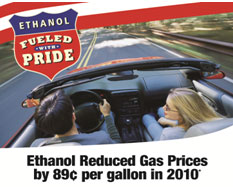 The new advertising campaign quotes a