

 Cool Planet BioFuels has made a major breakthrough in converting biomass to gasoline. Using giant miscanthus, an advanced bioenergy crop, the company achieved 4,000 gallons/acre biomass to gasoline conversion in pilot testing. Gasoline has about one and a half times the energy of ethanol, so this is about twelve times more yield than current corn ethanol production levels.
According to the company, the giant miscanthus was developed at the University of Mississippi and provided from a high yield plot by Repreve Renewables. Other advanced bio-energy crops, such as sorghum and switch grass, can provide similar annual yields using this new process.
“These test results are based on nearly optimal crop growth conditions and demonstrate what is possible in a good growing season. Under more routine growing conditions, we estimate yields of about 3,000 gallons/acre should be achievable throughout the Midwest by selecting the proper energy crop for local conditions,” says Mike Cheiky, Cool Planet’s founder and CEO.
Agricultural waste from food crops also can produce up to 1,000 gallons of gasoline/acre using this new technology. The process creates ultra-high surface area carbon in an intermediate step of the conversion process. Some of this carbon can be diverted to form a very potent soil enhancer which can grow more crops and sequester carbon dioxide. Although opting to divert some of the carbon to soil enhancer will reduce the current fuel output, it can generate more fertile farm land for more food and fuel production over a several year period, particularly in areas which have low land productivity today. This sequestering process gives the Cool Planet fuel a low or even negative carbon rating.
Cool Planet’s technology and its potential global impact on climate change and poverty were recently detailed in a talk at Google’s elite SolveForX Conference where 16 speakers presented innovative technologies to address the world’s biggest problems. Each of the talks was reviewed by a group of 50 top scientists, inventors and futurists invited by Google. The consensus on Cool Planet’s presentation was that the company should pursue the carbon sequestration and land productivity enhancement aspects of this technology as well as its fuel production capabilities.
Read more on the renewable cellulosic gasoline process.


 “I think more of that will happen when we know more about who controls the Senate and the House, and who’s the president and where the EPA is on all this after November,” said Bill Lapp of
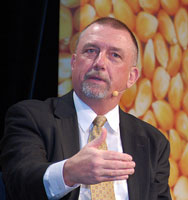 “If you took a poll of our members, and we may well do that at our Commodity Classic next week, I would say that they view the RFS as more important than the farm bill,” said
 Corn growers are now gathering this week in Nashville for the Commodity Classic, and NCGA president Garry Niemeyer of Illinois says there is a lot of truth in the idea that the RFS is more important to them than the farm bill. “The Renewable Fuel Standard is really what sets the basis for where we are with ethanol,” said Niemeyer. “We’ve worked very hard to make sure that we have a very good Renewable Fuel Standard bill and it is a road map for our future with ethanol.”

 Brazil is reportedly planning to pump $38 billion into its ethanol sector to help increase production.
 The
 This edition of “The Ethanol Report” offers a wrap-up with some of the highlights from the conference, featuring comments from keynote speakers Agriculture Secretary Tom Vilsack, futurist Dr. James Canton, political commentators Karl Rove and Robert Gibbs, and RFA president and CEO Bob Dinneen.
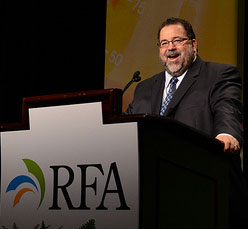
 As the ethanol industry was meeting in Orlando last week, President Obama was talking energy just a few hundred miles to the south at the University of Miami.