

USDA FAS Chart
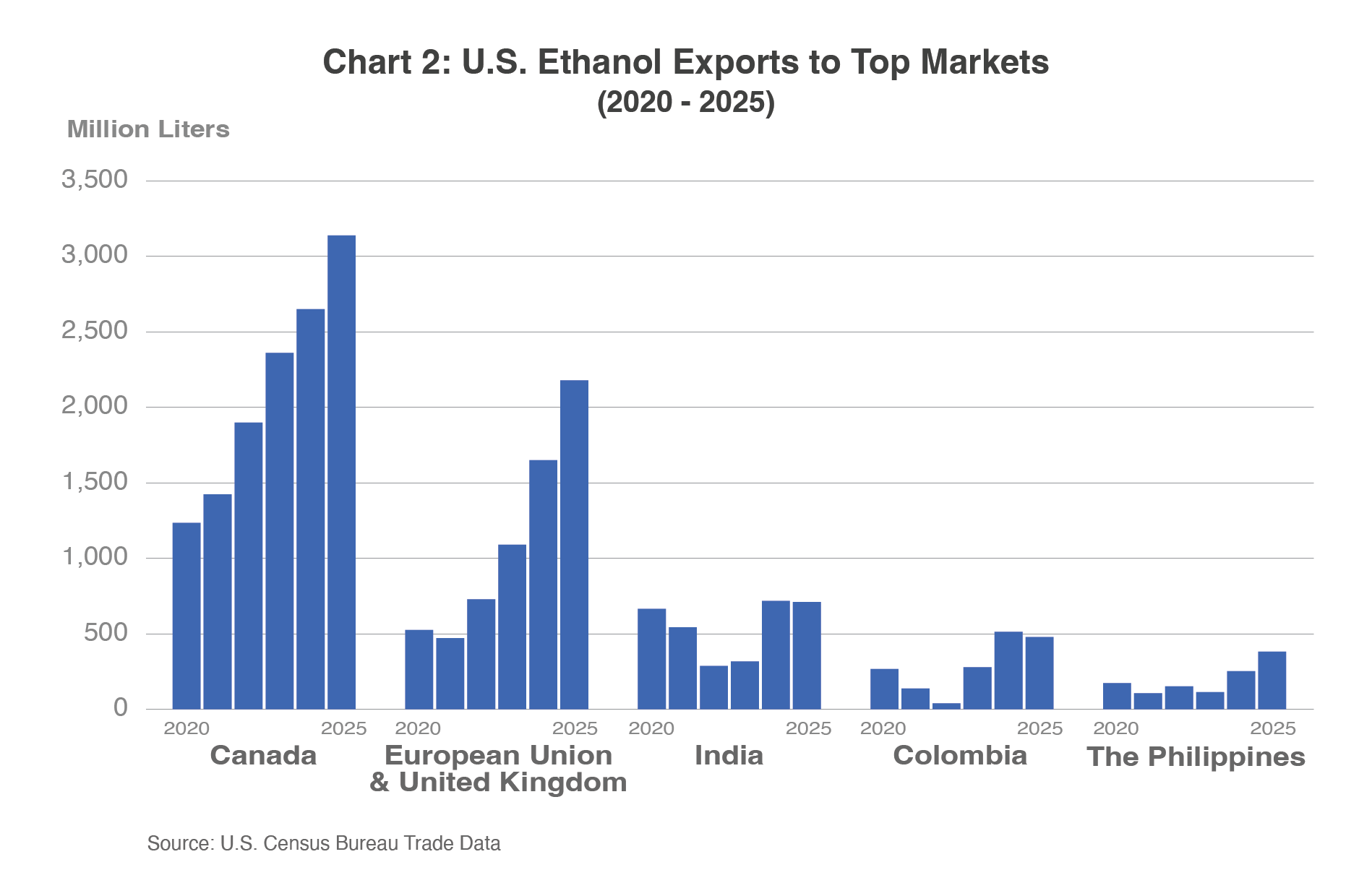
According to a new report from USDA’s Foreign Agriculture Service (FAS), record ethanol exports in 2024 and 2025 were fueled by growing global ethanol import demand and reduced competition from Brazil, with top ethanol-importing markets like Canada, the European Union (EU), the United Kingdom (UK), India, Colombia, and the Philippines increasing their ethanol consumption and driving global import demand higher. At the same time, strong domestic fuel ethanol demand in Brazil reduced exportable supplies and raised domestic prices, allowing the United States to increase export share to a growing market.
Through June 2026, U.S. ethanol exports are running ahead of last year’s record pace, 12 percent by volume and 21 percent by value. Among the unknowns USDA is watching for the rest of this year include supply side wildcards such as whether Brazil will be able to regain lost export market share and if the 45Z tax credit will result in higher profitability for U.S. ethanol producers to increase production and create more competitive pricing in the export market.
On the demand side, the biggest wildcards are changes to policy, especially in response to high energy prices caused by the conflict in the Middle East and the closure of the Strait of Hormuz. Countries have announced intentions to increase biofuel blending mandates or speed up the implementation of planned blending increases in the face of high energy prices. In Brazil, the mandatory blend rate for Gasoline C was temporarily increased to 32 percent for 180 days in July 2026. If realized, this will create even greater ethanol consumption, reducing exportable supplies during the back half of 2026.
Recent trade negotiations have also yielded greater market opportunities for U.S. ethanol in 2026, including to Guatemala and Vietnam.