

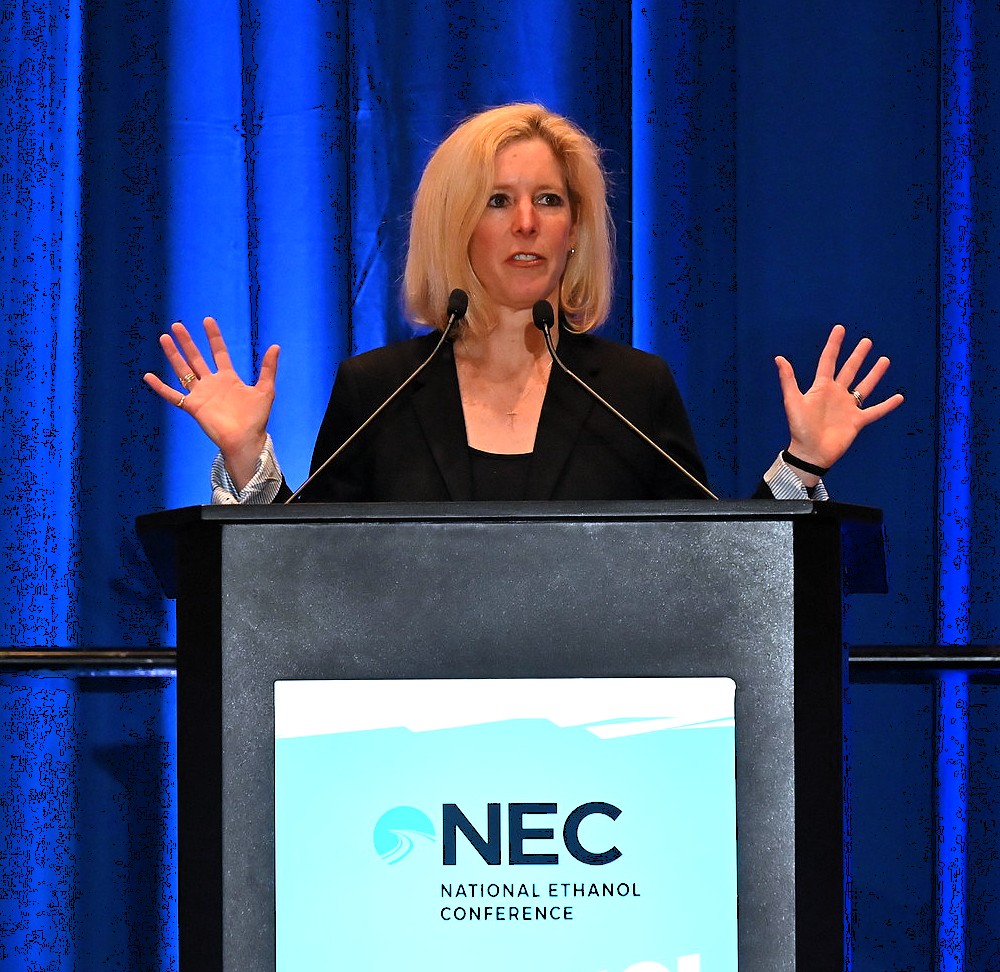
 At the recent National Ethanol Conference, Cornell University Professor Sarah Kreps, an expert in AI, national security, and geopolitics, addressed how artificial intelligence intersects with energy security and global competition.
While admitting she’s “not an ethanol insider,” Kreps drew from her upbringing in Lancaster County, Pennsylvania to connect AI’s challenges to the ethanol sector.
Kreps emphasized that AI’s rapid growth is bottlenecked by energy infrastructure and politics, positioning the ethanol industry within a “much bigger and very complex system of energy security, industrial policy, and infrastructure.” She compared ethanol production’s need for proximity to corn supplies with AI’s reliance on critical materials and minerals for compute power. “You can’t sustain this large-scale compute without the supply chains,” she noted, underscoring parallels in geographic and resource dependencies.
Discussing AI adoption, Kreps shared insights from conversations with attendees. “AI in your industry seems to be a lot of like individual use, but it’s not universal. And there’s a kind of lag effect within certain parts of the industry.” She notes this mirrors broader AI trends where geographic advantages determine deployment speed.
Kreps predicted AI’s electricity demand will surge, becoming a “material factor” in power systems, potentially doubling or tripling in key regions by the early 2030s. This shift could elevate ethanol’s role in sustainable energy solutions, especially amid data center expansions straining grids.
“Your industry is very well placed to be doing what it’s doing and trying to kind of leverage the opportunities and hedge against the risk,” said Kreps, as she urged ethanol stakeholders to view AI not just as a tool, but as a catalyst for navigating energy geopolitics and innovation.
NEC26 AI, Energy Security (37:04)